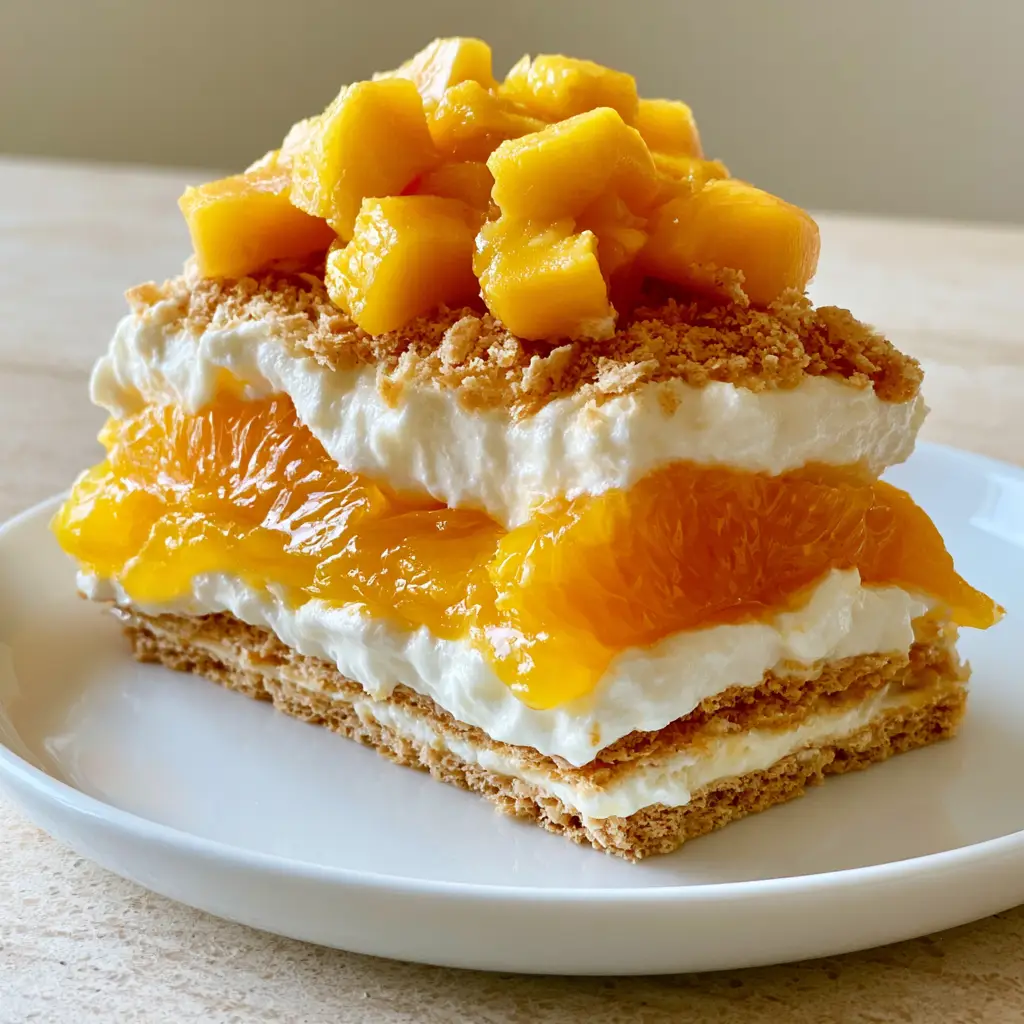
There is nothing quite like the sight of a thick, chilled slice of Mango Cakes sitting on a minimalist white ceramic plate, especially when bathed in the warm, sun-drenched afternoon daylight of a kitchen window. This iconic Filipino dessert, often called a Mango Graham Float, is a masterpiece of textures, layering golden-brown honey graham crackers with an ivory-colored, velvety whipped cream mixture and vibrant, translucent slices of ripe Manila mangoes.
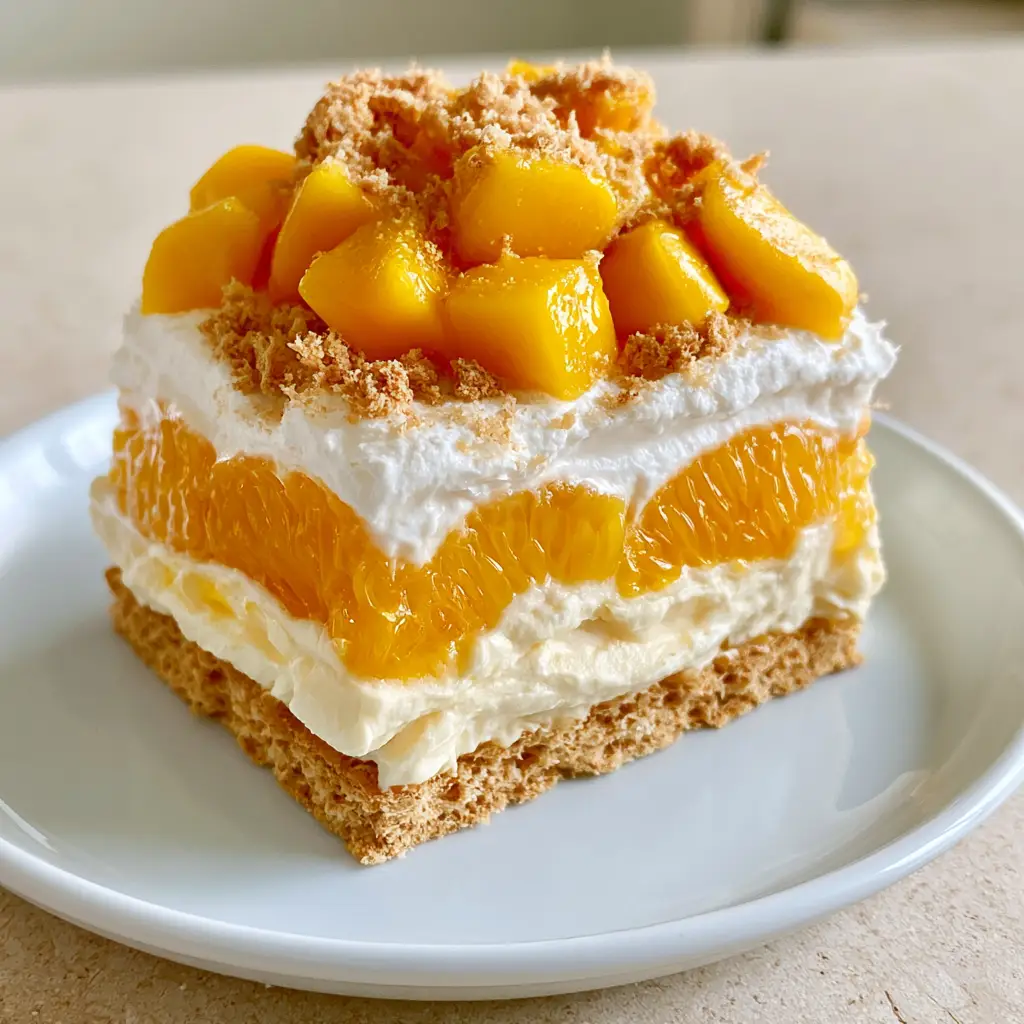
When you cut into this cake, the side-view cross-section reveals perfectly defined, stable layers that look as professional as any bakery-made confection. The cream is firm yet airy, the mangoes provide a glistening pop of tropical color, and the top is garnished with a generous pile of fresh mango cubes and a fine dusting of graham cracker crumbs. It is a visual and sensory experience that defines summer indulgence.
Whether you are looking for a show-stopping centerpiece for a dinner party or a simple weekend treat, these Mango Cakes offer a sophisticated flavor profile that belies their simple, no-bake preparation. This recipe focuses on achieving that elusive “clean-cut” edge and structural stability that makes for the perfect handheld smartphone photo.
Why This Tropical Filipino Dessert is the Ultimate Crowd-Pleaser
- Structural Integrity: By using a specific ratio of chilled heavy whipping cream and sweetened condensed milk, we ensure the layers stay stable and defined even after slicing.
- No-Bake Simplicity: Achieve professional-level aesthetics without ever turning on the oven, making this perfect for hot summer days.
- Contrast in Textures: The recipe features a golden-brown graham cracker base, soft hydrated crackers in the middle, velvety cream, and the fresh bite of cubed mango topping.
- Visual Brilliance: The translucent orange Manila mangoes against the ivory cream create a high-contrast, sun-drenched look that is naturally beautiful.
Essential Elements for the Perfect Velvet Cream Layer
The soul of these Mango Cakes lies in the cream. We use 2 cups (480ml) of chilled heavy whipping cream. It is scientifically vital that the cream is kept at 40°F (4°C) or lower before whipping to ensure the fat globules can trap air effectively, creating a stable foam.
To this, we fold in 1 can (14oz/397g) of sweetened condensed milk. Unlike granulated sugar, condensed milk provides a silky, viscous texture that binds with the cream without adding graininess. This mixture acts as the hydrating agent for the crackers, softening them over time into a cake-like consistency.
If you find yourself craving other fruit-forward treats after mastering this cream, you might enjoy these raspberry lemon ricotta muffins for your next brunch. Both recipes celebrate the harmony of dairy and vibrant fruit.
Selecting the Best Manila Mangoes for Vibrant Color
For the most authentic and visually striking Mango Cakes, Manila mangoes (also known as Carabao mangoes) are the only choice. Look for fruit that is deep yellow-orange with a slight floral scent at the stem. The flesh should be buttery and fiber-free.
You will need about 3 to 4 large mangoes. Half will be thinly sliced for the internal layers—achieving that translucent orange look—while the rest will be cubed for the generous garnish on top. The glisten seen in the sunlight comes from the natural sugars in the ripe fruit, which “weeps” slightly when sliced, creating a beautiful natural glaze.
If you love tropical flavors as much as we do, this dessert pairs beautifully with a refreshing blackberry coconut pink drink to keep the summer vibes going.
Kitchen Tools for a Perfectly Layered Mango Cake
To achieve the “clean-cut square slice” described in our visual blueprint, you need the right tools. A 9×9 inch (23x23cm) glass baking dish is ideal as it allows you to see the golden-brown honey graham cracker layers from the side.
A stand mixer or a powerful hand mixer is required to whip the cream to stiff peaks. Without sufficient aeration, the Mango Cakes will be runny rather than stable. You will also need a sharp offset spatula to smooth the ivory cream into perfectly even layers, ensuring no air pockets remain between the mango slices and the crackers.
Finally, a very sharp chef’s knife dipped in hot water and wiped clean between cuts is the secret to that professional side-view cross-section. This prevents the cream from dragging and keeps the layers distinct and sharp.
Step-by-Step: Crafting Your Sun-Drenched Mango Graham Float
Preparing the Cream Foundation
In a chilled large bowl, pour in your 2 cups (480ml) of heavy whipping cream. Begin whipping on low speed to prevent Splashing, then gradually increase to medium-high. Watch for the cream to transform from a liquid to a thick, velvety foam.
Once you reach soft peaks, slowly pour in the sweetened condensed milk and 1 tsp (5ml) of pure vanilla extract. Continue whipping until stiff peaks form. The cream should be firm enough to hold its shape but still look ivory-colored and smooth, not curdled or over-whipped.
Building the Golden-Brown Graham Base
Start by lining the bottom of your dish with whole honey graham crackers. You may need to snap some crackers to fit the edges perfectly. This base layer provides the structural foundation for the entire slice.
Spread about one-third of your cream mixture over the crackers using an offset spatula. Ensure the cream reaches all the way to the corners of the dish to support the weight of the mangoes that come next.
Layering the Translucent Mango Slices
Lay the thinly sliced Manila mangoes across the cream in a single, overlapping layer. These should look like vibrant orange shingles. The thinness of the slices is crucial for a “clean-cut” edge; thick chunks inside the cake can cause the layers to slide when sliced.
Repeat the process: crackers, cream, and mango slices. Finish with a final thick layer of the ivory cream, smoothing the top perfectly flat to prepare for the garnish.
The Final Garnish and Chill
Top the center of the cake with a generous pile of fresh mango cubes. Then, take 1/2 cup (60g) of crushed graham cracker crumbs and create a fine dusting around the edges or over the top. This adds a rustic, golden-brown contrast to the vibrant fruit.
Place the dish in the refrigerator for at least 8 hours, though 24 hours is best. This “chilled state” is when the magic happens: the crackers absorb moisture from the cream and mangoes, turning into a soft, sponge-cake texture that is easy to slice through cleanly.
Culinary Secrets for Achieving That Professional Clean-Cut Slice
The secret to the “stable layers” seen in our professional photos is patience. If you cut the Mango Cakes too early, the crackers will still be hard, and the cream will squish out the sides. The 8-hour chill time is a non-negotiable chemical process of hydration.
To get that perfect side-view, use a ruler to mark even squares. Use a steady, downward motion with your knife—do not saw back and forth. This ensures the graham cracker crumbs and mango cubes stay exactly where you placed them on the top.
If you enjoy recipes that require a bit of technique for the perfect result, you might also like mastering golden butter waffles for a crisp, professional breakfast finish.
The Best Way to Store and Mature Your No-Bake Layers
Mango Cakes actually improve with a bit of age. On the second day, the flavors of the honey graham crackers and the Manila mangoes fully meld with the sweetened cream. Keep the cake covered with plastic wrap to prevent it from absorbing any odors from the refrigerator.
This dessert can be stored in the fridge for up to 4 days. If you want a semi-frozen treat similar to an icebox cake, you can place it in the freezer for 2 hours before serving. This makes the cream extra firm and gives the mangoes a refreshing, sorbet-like texture.
What to Serve Alongside These Creamy Mango Treats
While these Mango Cakes are a star on their own, they fit perfectly into a larger tropical or summer-themed menu. If you are hosting a brunch, start with something savory like creamy coconut rice topped with grilled protein to balance the sweetness of the dessert.
For a lighter contrast, a side of fresh berries or a citrus-based salad can cut through the richness of the condensed milk. This dessert also pairs surprisingly well with a strong cup of dark roast coffee or a jasmine green tea, which complements the floral notes of the Manila mangoes.
Answering Your Burning Questions About No-Bake Mango Desserts
Yes, you can substitute the heavy cream with chilled full-fat coconut cream and use a sweetened condensed coconut milk. Note that the layers may be slightly softer than the dairy version.
While you can use varieties like Kent or Tommy Atkins, Manila mangoes are highly recommended because they are sweeter, less fibrous, and have a vibrant orange color that creates the best visual contrast.
The key is a long chill time (at least 8 hours) to soften the crackers. Use a sharp knife dipped in hot water, wiping the blade clean between every single cut to prevent the cream from smearing.
Absolutely! Freezing it for 2-4 hours turns it into a delicious semi-frozen treat. Just be sure to let it sit at room temperature for 10 minutes before slicing for the best texture.
This happens if the cake hasn’t chilled long enough. The crackers need time to absorb moisture from the cream and fruit to achieve that soft, cake-like consistency.
Mango Cakes: The Ultimate No-Bake Recipe Card
Mango Cakes: The Ultimate No-Bake Mango Graham Float Recipe
Ingredients
Equipment
Method
- In a cold bowl, whip the chilled heavy cream until soft peaks form. Add vanilla and condensed milk, then continue whipping until stiff, velvety peaks form.
- Place a single layer of whole graham crackers at the bottom of the dish.
- Spread 1/3 of the cream mixture over the crackers. Top with a layer of thinly sliced Manila mangoes. Repeat this process twice more.
- Top the final cream layer with cubed mangoes in the center and a generous dusting of graham cracker crumbs.
- Refrigerate for at least 8 hours (24 is better) to allow the crackers to soften into a cake-like texture.
- Use a sharp knife dipped in hot water to cut into clean, square slices.
Notes
Use Manila (Carabao) mangoes for the best flavor and fiber-free texture.
Closing & Call to Action
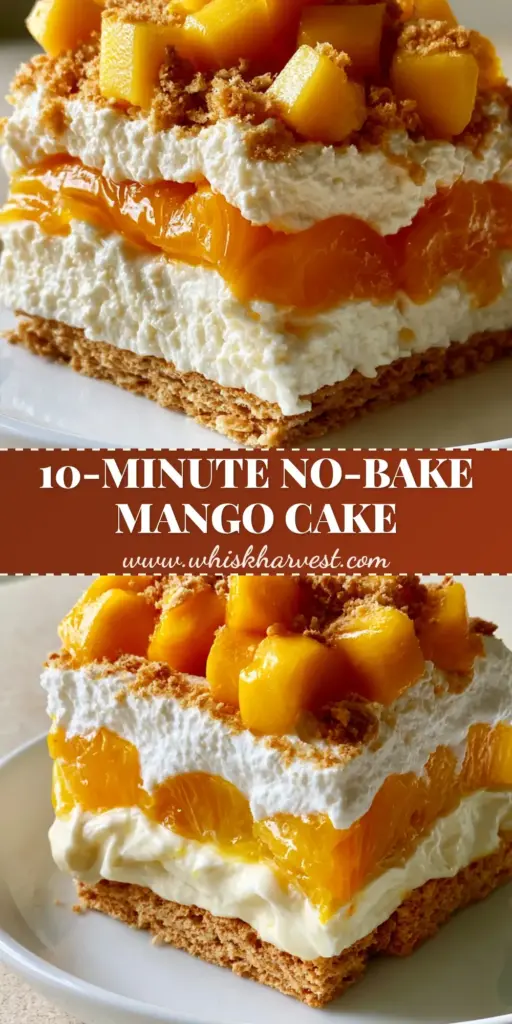
Creating these Mango Cakes is a labor of love that rewards you with the most beautiful, sun-drenched slices of tropical heaven. From the velvety ivory cream to the vibrant Manila mangoes, every layer is designed for maximum flavor and visual appeal. I hope this recipe brings a little bit of island sunshine into your kitchen!
If you enjoyed this recipe, please leave a comment below and let me know how your layers turned out! Don’t forget to follow me on Pinterest for more culinary inspiration. If you make this, tag @whisk_harvest so I can see your beautiful clean-cut slices!