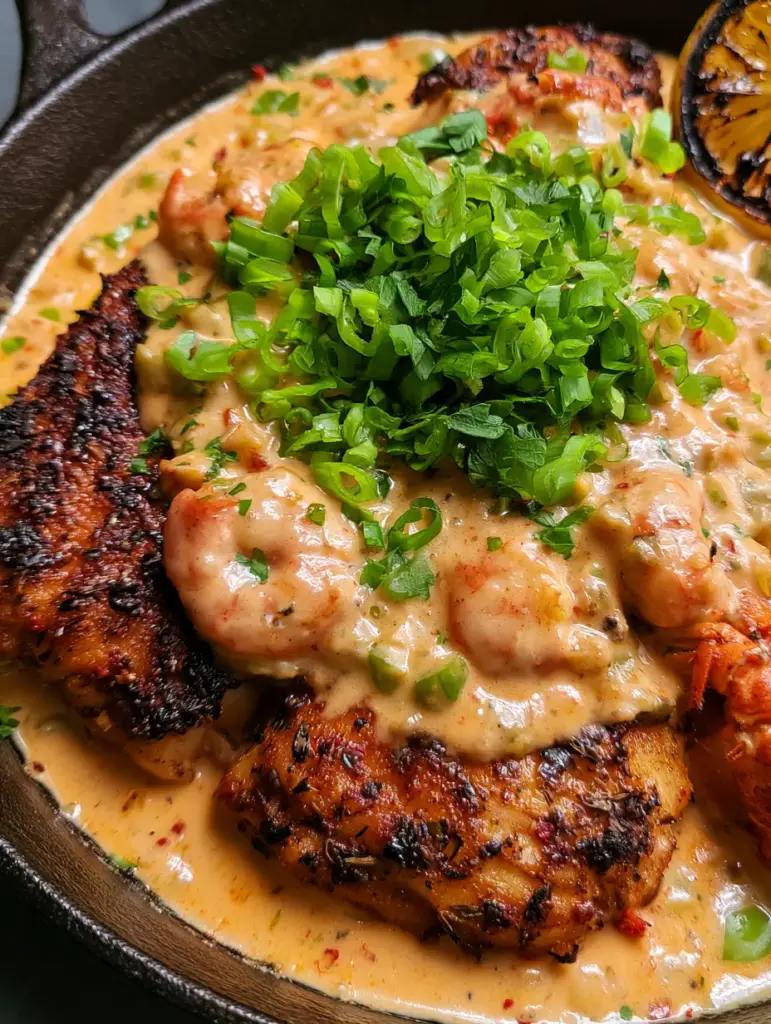
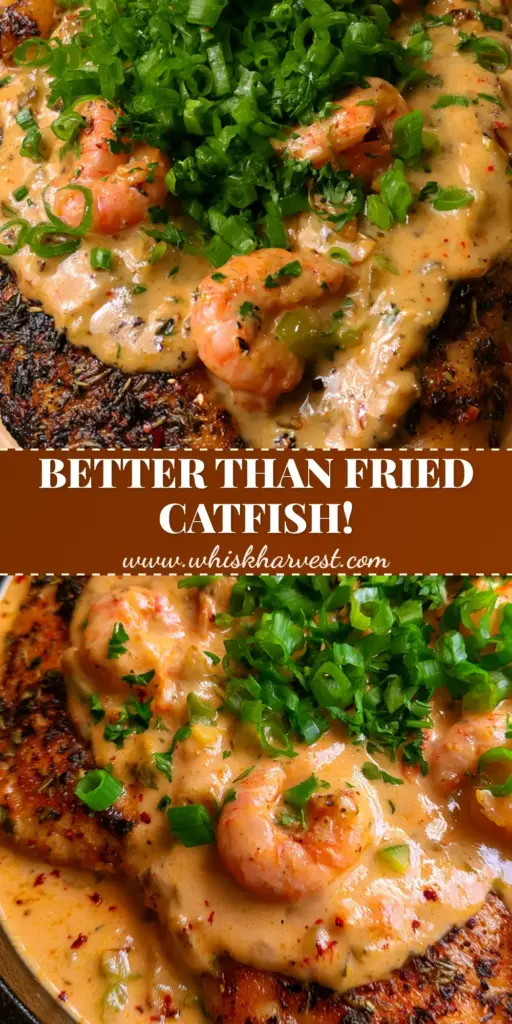
Catfish Opelousas is a legendary Louisiana staple that captures the very soul of Acadiana. This dish isn’t just a meal; it is a masterclass in texture, featuring two thick catfish fillets coated in a dark, crusty blackened spice rub that shatters under the fork to reveal moist, flaky white fish. Smothered in a thick, velvety, glossy pale-orange crawfish cream sauce, it brings a luxurious richness that balances the heat of the blackened crust.
If you have ever visited the iconic Palace Café in Opelousas or any high-end Creole bistro in New Orleans, you know the visual appeal is just as important as the flavor. Imagine a seasoned black cast iron skillet arriving at your table, the sauce still shimmering under soft natural light, dotted with succulent pink crawfish tails and bright green scallions. This recipe allows you to recreate that exact high-gloss, professional-grade experience in your own kitchen.
Why This Authentic Cajun Seafood Recipe Works
- Visual Contrast: The deep, charred spice rub against the pale-orange cream sauce creates a restaurant-quality presentation.
- Textural Balance: We achieve a “glassy” sear on the catfish while maintaining a succulent, tender interior.
- Layered Heat: Visible flakes of charred thyme and red cayenne provide an aromatic warmth rather than just a stinging burn.
- The “Opelousas” Finish: Using whole pink crawfish tails ensures every bite feels like a celebratory feast.
The Flavor Foundation: Ingredients for Catfish Opelousas
Every element in the Catfish Opelousas is designed to build layers of flavor. We start with the fish and move into the rich, seafood-forward cream sauce that defines this classic preparation.
Thick Catfish Fillets: Choose fillets that are at least 1-inch (2.5cm) thick to ensure they can withstand the high heat of the blackening process without drying out. The sturdy structure of catfish is essential for holding up under the heavy crawfish topping.
Louisiana Crawfish Tails: Use 1/2 lb (225g) of whole pink crawfish tails, preferably with the yellow “fat” or “head meat” included for maximum flavor. These provide a sweet, lobster-like contrast to the spicy fish.
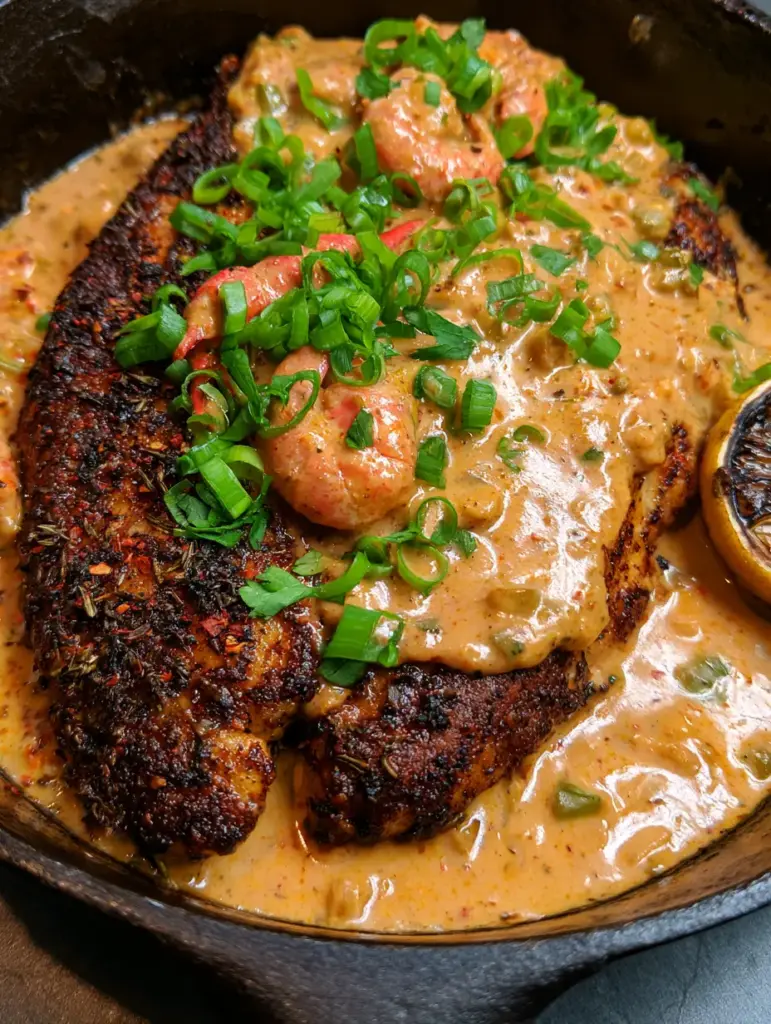
The Blackening Rub: A blend of smoked paprika, garlic powder, onion powder, and crucial visible flakes of dried thyme and red cayenne. This combination creates that signature dark charred spice rub seen in the finest Creole kitchens.
Green Bell Peppers: Finely sautéed bits of green pepper offer a subtle earthy bitterness that cuts through the richness of the cream. This is a foundational element of the Cajun “holy trinity.”
Heavy Cream & Seafood Stock: 1 cup (240ml) of cream and 1/2 cup (120ml) of stock form the base of our thick, velvety, glossy pale-orange crawfish cream sauce. The stock provides depth while the cream provides the high-gloss shimmer.
Fresh Aromatics: Finely sliced bright green scallions and chopped flat-leaf parsley are added at the very end. These aren’t just for color; they provide a fresh, sharp bite to wake up the palate.
Unsalted Butter: You will need at least 4 tbsp (60g) of butter to facilitate the blackening process and to emulsify the sauce into its signature velvety texture.
Essential Kitchen Tools for the Perfect Sear
To achieve the specific look of the Catfish Opelousas as described in our visual blueprint, certain tools are non-negotiable. You cannot achieve a true blackening without the heat retention of heavy metal.
Seasoned Black Cast Iron Skillet: This is the vessel of choice. The cast iron holds an intense, even heat that transforms the spices into a crusty, charred barrier without sticking.
Fish Spatula: A thin, flexible stainless steel spatula allows you to get under the delicate blackened crust without breaking the fillet. If you enjoy working with seafood, this is as essential as the tools used for garlic butter baked salmon.
Heavy-Bottomed Saucepan: For the crawfish cream sauce, you need a pan that prevents the cream from scorching as it reduces to its thick, glossy state.
Developing the Dark Charred Spice Rub
Preparing the Catfish
Pat the catfish fillets completely dry using paper towels. Moisture is the enemy of a good sear; any surface water will steam the fish rather than charring the spices. Dredge each fillet generously in the spice blend, pressing the thyme and cayenne flakes into the flesh.
The Art of Blackening
Heat your cast iron skillet until it is wisps of smoke begin to rise. Add a tablespoon of high-smoke point oil and a knob of butter. Place the fish in the skillet—it should hiss loudly. Cook for 3-4 minutes per side until a dark, crusty spice rub has formed. The visual cue you are looking for is a matte-black finish with occasional glowing red spots from the cayenne.
Crafting the Glossy Crawfish Cream Sauce
Sautéing the Trinity
In a separate pan, melt butter and add your finely diced green bell peppers. Sauté until soft but not browned. The goal is to incorporate them into the sauce so they provide flavor without distracting from the whole pink crawfish tails.
Reduction and Emulsification
Whisk in your seafood stock and heavy cream. Bring to a gentle simmer, never a rolling boil, as this can break the cream. Reduce the liquid by half until it coats the back of a spoon. This creates that “velvety, glossy” texture described in our visual prompt. If you’ve mastered the sauce for Cajun jambalaya pasta, this process will feel very familiar.
Folding in the Succulence
Add the crawfish tails into the sauce during the last two minutes of cooking. This warms them through without making them rubbery. The sauce should take on a pale-orange hue as the fats from the crawfish integrate with the cream.
Assembling the Catfish Opelousas
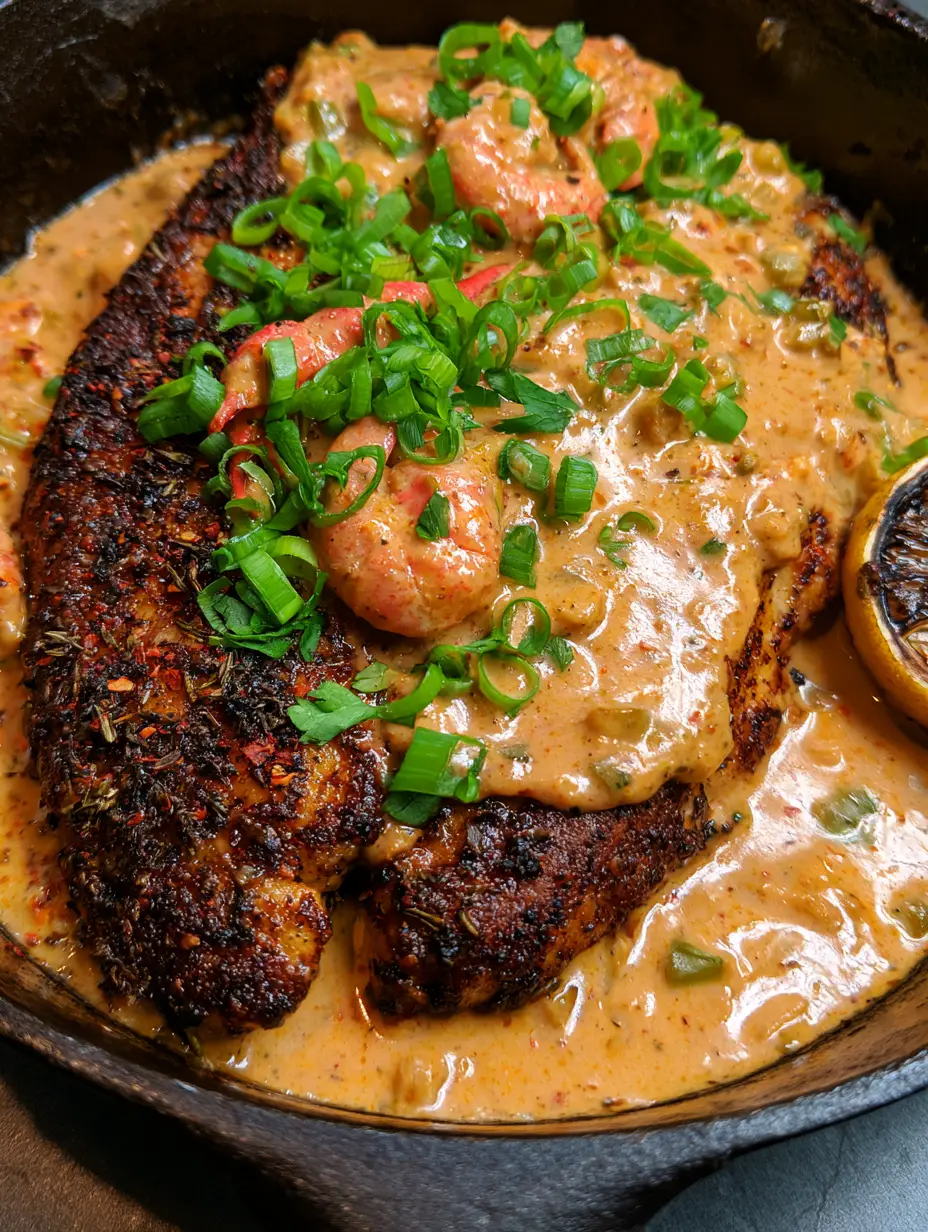
To serve, place the two blackened fillets back into the warm cast iron skillet. Generously smother the center of the fish with the crawfish cream sauce, allowing it to cascade down the sides of the charred crust. The visual contrast between the dark fish and the shimmering orange sauce is the hallmark of this dish.
Finish with a heavy garnish of finely sliced scallions and a sprinkle of flat-leaf parsley. Place a single charred lemon half on the side—the acidity is vital for cutting through the fat of the cream and the spice of the rub.
Pro Tips for Professional Results
- Control the Smoke: Blackening creates a lot of smoke. Ensure your kitchen is well-ventilated or perform the searing step on an outdoor burner.
- Temper Your Cream: Ensure your heavy cream is at room temperature before adding it to the hot stock to prevent curdling.
- Don’t Overcrowd: If your skillet isn’t large enough for two thick fillets, sear them one at a time. Overcrowding drops the pan temperature and ruins the crust.
- The Lemon Trick: Char the lemon cut-side down in the skillet while the fish rests. This caramelizes the sugars and makes the juice more mellow and complex.
Storage and Reheating Guidelines
Storage: Store the fish and the sauce in separate airtight containers in the refrigerator for up to 2 days. Keeping them separate prevents the blackened crust from becoming soggy.
Reheating: Reheat the sauce in a small saucepan over low heat, adding a splash of milk if it has thickened too much. The fish is best reheated in a 350°F (175°C) oven until just warmed through to preserve the texture.
Freezing: We do not recommend freezing Catfish Opelousas. The delicate emulsion of the cream sauce and the texture of the crawfish tails will degrade significantly upon thawing.
Perfect Pairings for a Cajun Feast
Since this dish is incredibly rich, you want sides that can either soak up the sauce or provide a crisp contrast. A bed of white rice is traditional, but for something more interesting, try crispy sliced potatoes to add another layer of crunch to the meal.
If you are serving this as part of a larger seafood spread, consider a light starter like an avocado mango salad to cleanse the palate before the spicy, creamy main course.
Frequently Asked Questions
Yes, you can use frozen crawfish tails. Ensure they are fully thawed and patted dry before adding to the sauce to prevent excess water from thinning the glossy cream consistency.
Ensure the skillet is preheated until smoking and the fish is well-coated in butter or oil. Once you place the fish down, do not move it for at least 3 minutes to allow the crust to form and release naturally.
It has a significant kick from the cayenne and black pepper in the blackened rub, but the heavy cream in the sauce helps to mellow and balance the heat for a manageable warmth.
In Louisiana cuisine, ‘Opelousas’ usually refers to a dish—often fish—that is blackened and smothered in a rich, spicy crawfish or seafood cream sauce, named after the city of Opelousas.
Redfish or Drum are excellent traditional substitutes. If those aren’t available, any thick, sturdy white fish like Cod or Halibut can work, though the flavor profile will slightly change.
The Complete Catfish Opelousas Recipe Card
Catfish Opelousas: The Ultimate Cast Iron Cajun Smothered Delicacy
Ingredients
Equipment
Method
- Pat the catfish dry. Dip in melted butter, then coat heavily with the blackening spice, ensuring the thyme and cayenne are visible.
- Heat a cast iron skillet over high heat. Add the fish and sear for 3-4 minutes per side until a dark, charred crusty rub forms.
- In a saucepan, sauté green peppers in butter. Add stock and cream; simmer until reduced to a thick, velvety, glossy pale-orange consistency.
- Fold in the crawfish tails and heat through for 2 minutes. The sauce should be shimmering and succulent.
- Place blackened fish in the skillet, pour over the thick crawfish sauce, and garnish with scallions, parsley, and the charred lemon wedge.
Notes
Use room temperature cream to prevent the sauce from breaking.
Bring the Flavor of Opelousas Home
Mastering Catfish Opelousas is a rite of passage for any home cook who loves the bold, uncompromising flavors of Louisiana. Between the crackling blackened crust and the luxurious crawfish-laden cream, this dish is a sensory explosion that never fails to impress. Whether you’re cooking for a special occasion or just craving a deep dive into Creole culture, this recipe delivers.
Did you achieve that perfect high-gloss shimmer on your sauce? Let us know in the comments below! If you loved this recipe, please share your creations on Pinterest and follow us for more authentic Southern inspirations.