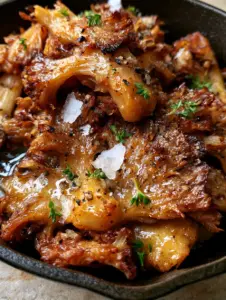
The perfect Cauliflower steak is a masterclass in texture, transforming a humble head of brassica into a center-of-the-plate masterpiece. If you have ever been disappointed by a mushy, bland vegetable slab, this recipe is your redemption arc. We are focusing on a thick-cut cauliflower slab with a seared golden-brown crust that rivals any traditional steak.
In this guide, we dive deep into the culinary forensics of achieving that restaurant-style char and juicy interior seen in high-end gastropubs. Every element, from the velvety lemon-tahini drizzle to the precise dusting of smoked paprika, is designed to create a visual and sensory explosion. This isn’t just a side dish; it is a plant-based revelation.
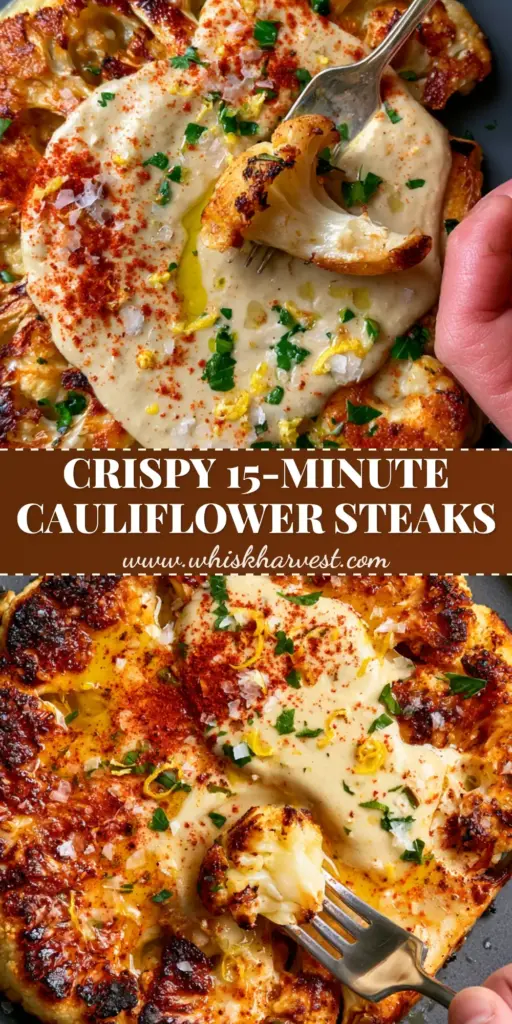
Imagine a macro, top-down perspective of your plate: a glistening surface of extra virgin olive oil, vibrant micro-greens, and micro-planed lemon zest. The first bite reveals a tender, succulent center protected by a deeply caramelized exterior. Let’s master the art of the Cauliflower steak together.
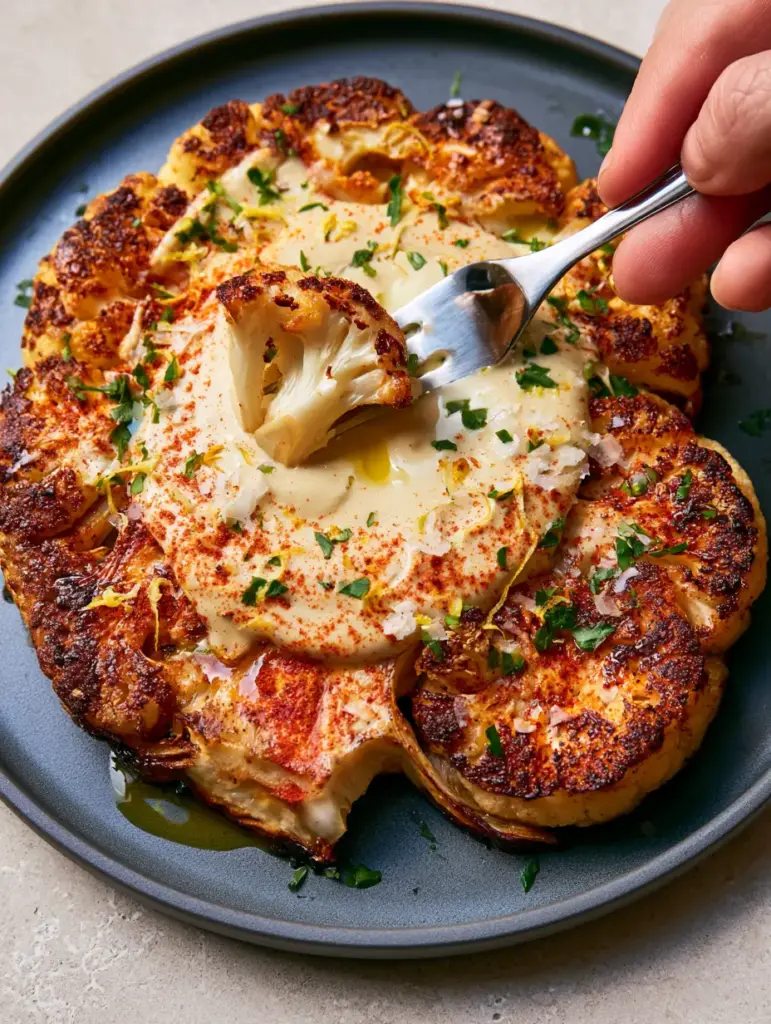
The Secrets Behind This Restaurant-Quality Cauliflower Steak
- The Maillard Reaction: We utilize high-heat searing to create a deep golden-brown caramelized edge that provides a rich, nutty flavor profile.
- Textural Contrast: The combination of a firm, juicy interior and a crisp outer crust ensures every bite is satisfying.
- Flavor Layering: We move beyond simple salt and pepper, incorporating a smoky paprika dusting and bright lemon zest for a multi-dimensional palate.
- Velvety Emulsification: The lemon-tahini sauce is balanced to provide a creamy, fat-rich mouthfeel that complements the charred edges perfectly.
Essential Ingredients for a Perfectly Seared Cauliflower Steak
Large Head of Cauliflower: You need a dense, heavy head of cauliflower to ensure you can cut thick, 1-inch (2.5cm) slabs without them falling apart. The central core is the “glue” that holds your steak together during the high-heat sear.
Extra Virgin Olive Oil: We use 3 tbsp (45ml) of high-quality oil to facilitate heat transfer and create that glistening, restaurant-style finish. It also serves as the carrier for our spices, ensuring even distribution across the crags of the florets.
Tahini Paste: 1/4 cup (60g) of hulled tahini provides the nutty, creamy base for our sauce. It offers a ground-sesame richness that pairs beautifully with roasted vegetables, much like the flavors found in our classic tahini-based recipes.
Fresh Lemon Juice and Zest: You will need 2 tbsp (30ml) of juice for the sauce and the zest of one full lemon for the garnish. The acidity cuts through the richness of the tahini and brightens the deep, charred notes of the seared cauliflower.
Smoked Paprika: 1 tsp (2g) of pimentón provides that signature “dusting” and an earthy, wood-fired aroma. This is what gives the dish its “steak-like” visual appeal and a subtle heat that lingers on the back of the tongue.
Flaky Sea Salt: A generous pinch of Maldon or similar flaky salt provides a crystalline crunch and bursts of salinity. Unlike table salt, flaky salt stays on the surface, creating those beautiful visual highlights seen in professional food photography.
Fresh Herbs & Micro-greens: 2 tbsp (5g) of finely chopped Italian parsley and a handful of micro-greens add a necessary pop of color and freshness. This mimics the garnish techniques used in vibrant modern dinner presentations.
Tools Required for the Ultimate Char
To achieve a professional-grade Cauliflower steak, equipment choice is non-negotiable. A heavy-bottomed cast iron skillet is the gold standard because it retains heat effectively, allowing for a consistent sear without the temperature dropping when the cold vegetable hits the pan.
You will also need a sharp chef’s knife for those precise 1-inch (2.5cm) cuts and a micro-plane for the lemon zest. A silver fork is the preferred tool for testing tenderness, as it allows you to feel the resistance of the core—much like checking a beef steak for doneness.
The Anatomy of the Perfect 1-Inch Slab
Slicing with Culinary Precision
Start by removing the outer green leaves but leave the stem intact; this is the structural foundation of your Cauliflower steak. Place the cauliflower on a stable cutting board, stem-side down, and cut directly through the center to create two even halves.
From the flat side of each half, cut a 1-inch (2.5cm) thick slab. A standard head will typically yield two “prime” steaks from the center; the remaining florets can be saved for a side dish like crispy roasted vegetables.
Mastering the High-Heat Sear
Heat your cast iron skillet over medium-high heat until the oil is shimmering but not smoking. Gently lay the cauliflower slabs into the pan; you should hear an immediate, aggressive sizzle—this is the sound of moisture evaporating and the Maillard reaction beginning.
Press down lightly with a spatula to ensure maximum surface contact. Sear for 4-5 minutes per side until you see those deep golden-brown edges and a visible restaurant-style char. This process builds the flavor base that roasting alone cannot achieve.
The Oven Finish for a Juicy Interior
Once seared, transfer the skillet to an oven preheated to 400°F (200°C). Roasting for an additional 10-12 minutes allows the dry heat to penetrate the thick core, softening the cellulose without turning the exterior mushy.
The goal is a “tender-crisp” texture where a fork slides into the stem with slight resistance. This dual-cooking method ensures your Cauliflower steak is never dry, maintaining a juicy, succulent interior that glistens under the natural morning light.
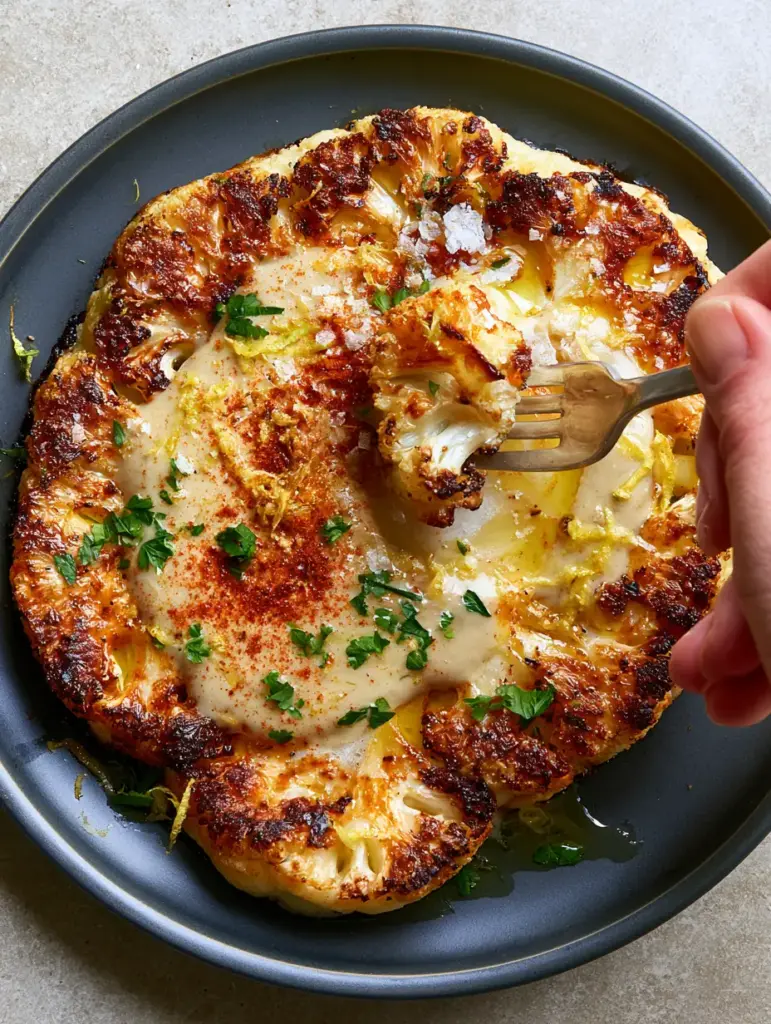
Whisking the Velvety Lemon-Tahini Drizzle
While the steaks roast, prepare the sauce by whisking the tahini, lemon juice, and a pinch of salt. Gradually add 1-2 tbsp (15-30ml) of warm water, whisking constantly until the mixture transforms from a thick paste to a smooth, pourable velvet.
The sauce should be thick enough to hold its shape when drizzled but fluid enough to coat the charred crags of the cauliflower. This sauce is a versatile staple, often used to elevate dishes like citrus-forward seafood.
Plating for Visual Impact
For a high-end presentation, use a matte charcoal ceramic plate to create a high-contrast backdrop for the golden cauliflower. Place the steak in the center and apply a generous, artistic drizzle of the lemon-tahini sauce across the surface.
Follow with a precise dusting of smoked paprika and a sprinkle of flaky sea salt. Finish with the micro-planed lemon zest, finely chopped parsley, and a delicate nest of micro-greens for a dish that looks as professional as it tastes.
Expert Tips for Cauliflower Success
- Room Temperature Is Key: Let your cauliflower sit out for 20 minutes before cooking to ensure even heat penetration.
- Don’t Crowd the Pan: Sear only two steaks at a time to maintain high pan temperature and prevent steaming.
- The “Glue” Factor: If a steak breaks, don’t panic! Simply sear the pieces together; the tahini drizzle acts as an excellent “culinary glue” to reassemble the visual slab on the plate.
- Oil Choice: Use an oil with a high smoke point like avocado oil if you find your olive oil smoking too early during the sear.
How to Store and Reheat Your Leftovers
Store any remaining Cauliflower steak in an airtight container in the refrigerator for up to 3 days. While the texture is best when fresh, it remains delicious as a cold salad topper the next day.
To reheat, avoid the microwave, as it will make the charred edges soggy. Instead, place the steak back in a hot, dry skillet for 2-3 minutes per side or in a 350°F (175°C) oven until warmed through and the crust recrisps.
What to Serve with Your Seared Steaks
This Mediterranean-inspired dish pairs beautifully with a variety of textures. Consider serving it alongside a bright fruit-forward salad to balance the smoky notes of the paprika.
If you are looking for a more substantial meal, these steaks are a fantastic “steak and potatoes” alternative when served with butter-crisp potatoes. The lemon-tahini sauce also bridges the gap perfectly if you choose to serve this as a side to perfectly roasted salmon.
Frequently Asked Questions
Yes, but you will lack the flat-surface sear of a cast iron skillet. Preheat the air fryer to 400°F (200°C) and cook for 15-18 minutes, flipping halfway through for even browning.
The secret is keeping the central core intact. Only cut steaks from the middle of the head where the stem holds the florets together. Save the loose outer florets for roasting separately.
When cut 1-inch thick and served with a fat-rich sauce like tahini, it is surprisingly hearty. To make it a full meal, serve it over a bed of quinoa or with a side of legumes.
Use an oil with a medium-to-high smoke point. Extra virgin olive oil works well for flavor, but avocado oil is superior if you want an extremely dark, high-heat char without smoke.
Tahini can be naturally bitter if it’s not well-emulsified or if the brand uses low-quality seeds. Adding lemon juice and a tiny pinch of maple syrup or honey can help balance the flavor.
The Ultimate Cauliflower Steak Recipe Card
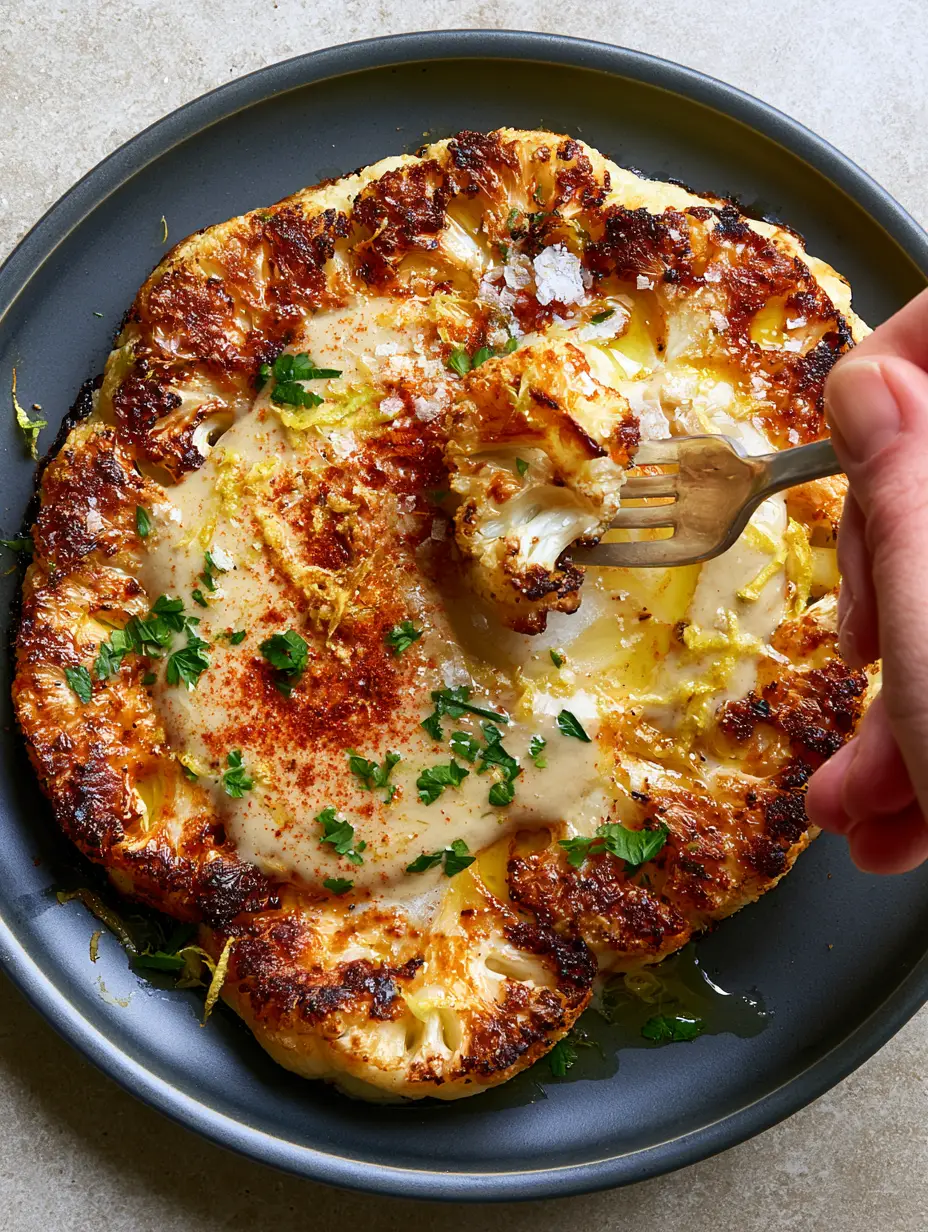
Cauliflower Steak with Lemon-Tahini Drizzle and Smoked Paprika
Ingredients
Equipment
Method
- Remove leaves from cauliflower. Cut the head in half through the core. Cut one 1-inch (2.5cm) thick slab from each half.
- Heat oil in a cast iron skillet over medium-high heat. Place steaks in the pan and sear for 4-5 minutes until a deep golden-brown crust and restaurant-style char form.
- Gently flip the steaks and sear the other side for another 3-4 minutes.
- Transfer the skillet to a 400°F (200°C) oven and roast for 10-12 minutes until the interior is juicy and tender.
- Whisk tahini, lemon juice, and water to create a velvety drizzle. Pour over steaks and garnish with smoked paprika, salt, zest, parsley, and micro-greens.
Notes
If the steak breaks, simply arrange the pieces together on the plate and cover with the tahini drizzle.
Closing Thoughts on This Plant-Based Masterpiece
The Cauliflower steak is more than just a trend; it is a testament to what is possible when professional technique meets fresh, seasonal produce. By focusing on the sear and the sauce, you have created a meal that is healthy, visually stunning, and deeply satisfying.
We would love to see your culinary creations! Share your photos on social media and tag us, or save this recipe to your boards on Pinterest. Don’t forget to subscribe to our newsletter for more restaurant-style recipes delivered straight to your inbox.