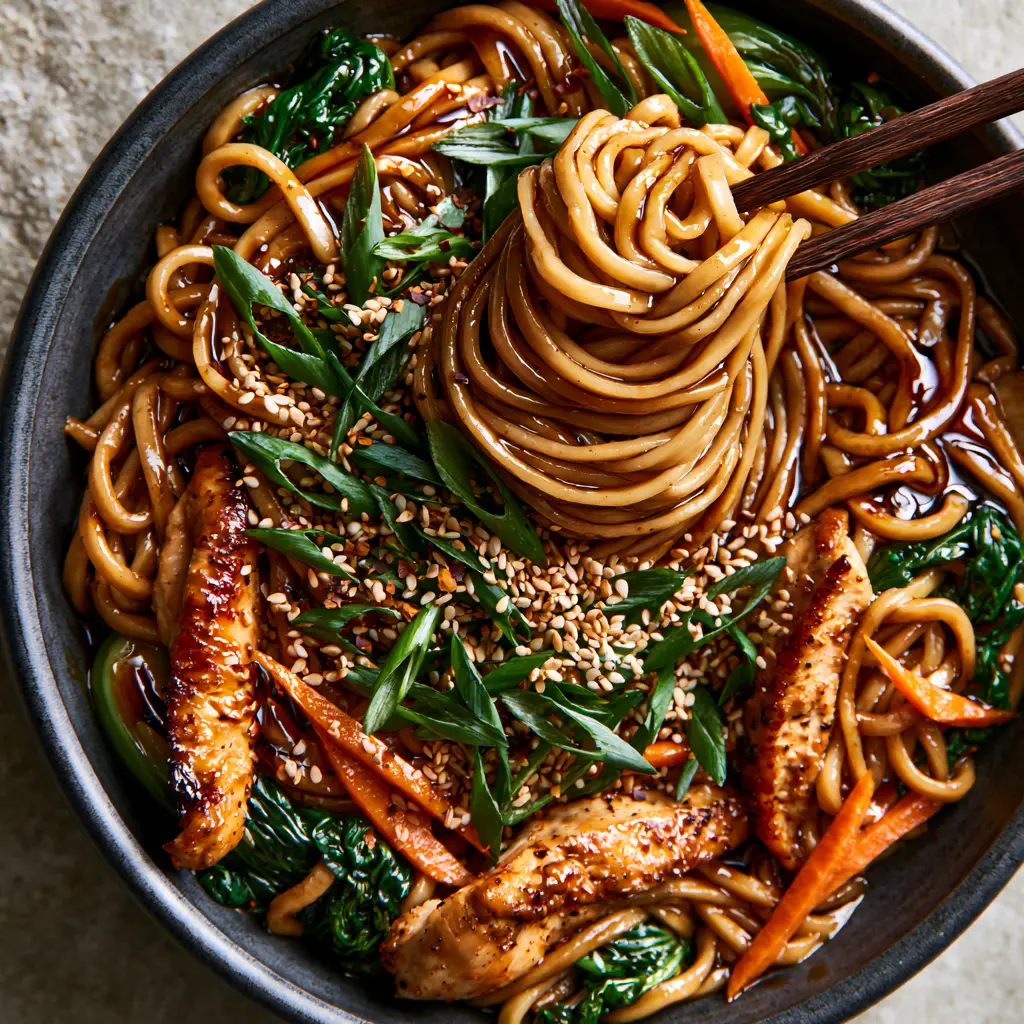
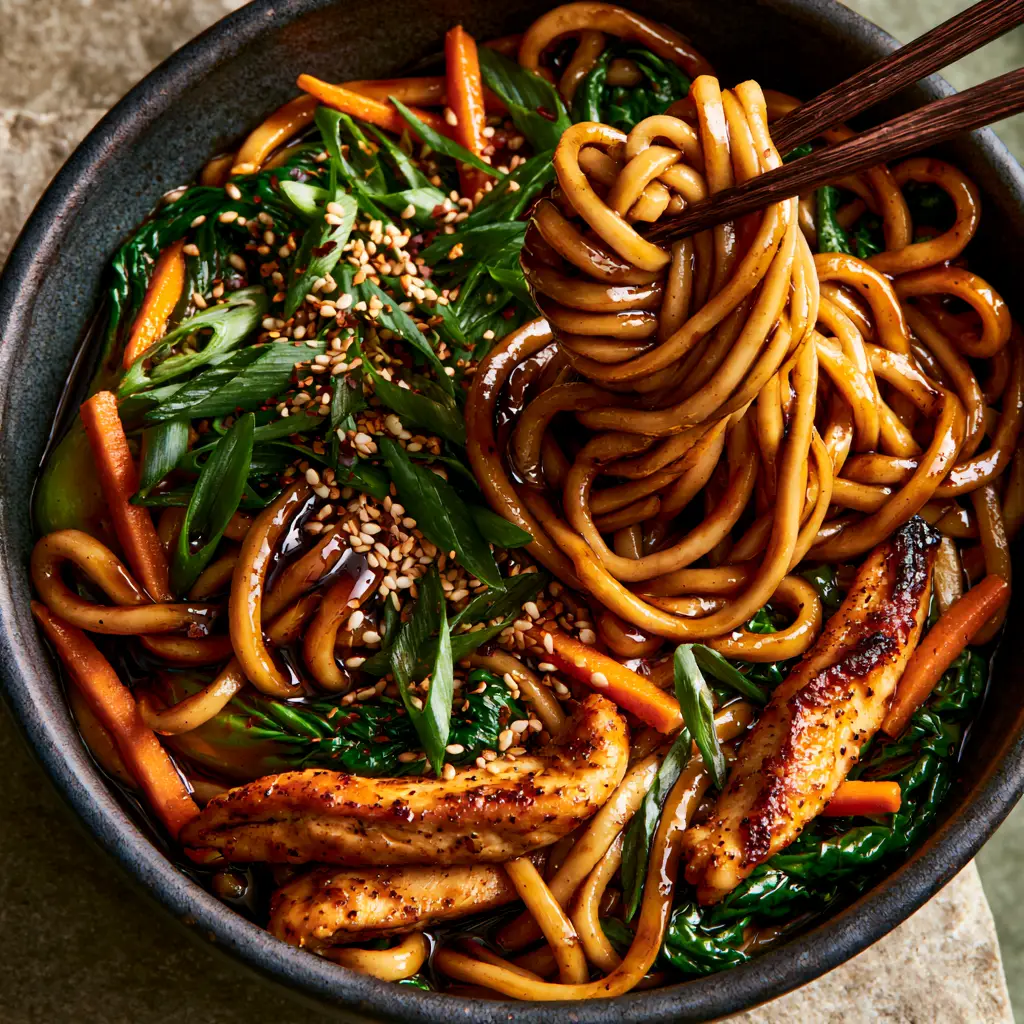
When it comes to mastering restaurant-quality Asian Dinner Recipes, the secret lies in the interplay between texture and the high-gloss finish of a perfectly emulsified sauce. This Soy-Ginger Chicken Lo Mein isn’t just a meal; it’s a sensory experience that brings the vibrant energy of a professional wok station into your home kitchen. From the first sight of the dark amber glaze catching the light to the aromatic crunch of fried garlic, every element is designed for maximum impact.
The beauty of this dish is its balance. You have the soft, yielding texture of thick wheat noodles contrasted against the crisp, raw julienned carrots and the savory, golden-brown sear on the chicken breast. It’s a complete meal that satisfies the craving for something savory, sweet, and slightly spicy, all while being achievable in under 30 minutes. If you have been looking for the centerpiece of your weekly meal rotation, this is the gold standard of Asian Dinner Recipes.
Why This Soy-Ginger Noodle Dish Redefines Home Stir-Fry
- High-Gloss Visual Appeal: The dark amber glaze is thickened to a precise viscosity, ensuring every noodle is drenched in a shimmering, light-catching coating.
- Maillard-Rich Chicken: By using high-heat searing techniques, the chicken breast achieves caramelized, golden-brown edges that provide a deep savory flavor.
- Textural Contrast: We combine wilted, tender bok choy with raw, snappy julienned carrots to create a sophisticated mouthfeel.
- Aromatic Garnish Layering: The addition of minced fried garlic and toasted sesame seeds adds layers of complexity that most home recipes lack.
Essential Components for the Perfect Umami Glaze
To achieve the visual and flavor profile required for elite Asian Dinner Recipes, the ingredient selection must be intentional. We aren’t just making a sauce; we are building a glaze that acts as a silk coating for the wheat noodles. Each ingredient serves a scientific purpose in the final structure of the dish.
Thick Wheat Lo Mein Noodles: 12 oz (340g). These provide the necessary starch surface for the glaze to cling to, ensuring no sauce is left at the bottom of the bowl. If you can’t find fresh lo mein, a high-quality dried wheat noodle or even a thick spaghetti can work in a pinch, though the chew will differ slightly from a refreshing Vietnamese glass noodle salad experience.
Chicken Breast Strips: 1 lb (454g). Slicing the chicken into uniform strips allows for rapid cooking and maximum surface area for caramelization. The goal is a “seared golden-brown” exterior while maintaining a succulent interior.
Soy Sauce & Dark Soy Sauce: 1/4 cup (60ml) and 1 tbsp (15ml). Regular soy provides salt and umami, while dark soy sauce is the secret to that “dark amber” color seen in professional photography. It adds a molasses-like depth without excessive saltiness.
Fresh Grated Ginger: 2 tbsp (12g). This provides the “zing” that cuts through the richness of the soy and oil. Always use fresh ginger rather than powdered for the most authentic aromatic profile, similar to the bright notes found in a zesty ginger lime pork.
Toasted Sesame Oil: 1 tbsp (15ml). Used as a finishing oil, it provides the characteristic nutty aroma that defines high-end Asian cuisine. It’s a foundational fat that bridges the flavors of the garlic and ginger.
Cornstarch: 1 tsp (3g). This is the “invisible” ingredient. When heated with the liquid components, it gelatinizes, creating the high-gloss highlights that make the noodles look wet and succulent even after plating.
Baby Bok Choy: 2 heads, quartered. These provide the “vibrant green” visual. We wilt them only slightly so they maintain their structural integrity and a hint of bitterness to balance the sweet glaze.
Julienned Carrots: 1 medium (60g). These must stay raw. By adding them at the very end, we preserve their “bright orange” color and a necessary crunch that breaks up the softness of the noodles.
Minced Fried Garlic: 3 cloves, fried in 2 tbsp (30ml) neutral oil. This is the “secret weapon.” Frying the garlic separately until golden brown creates a crunchy, savory garnish that elevates the dish from standard to spectacular.
Tools for Achieving Professional Wok Results
While you don’t need a commercial kitchen to excel at Asian Dinner Recipes, a few specific tools will help you achieve the textures described in our visual blueprint. A heavy-bottomed carbon steel wok or a large cast-iron skillet is preferred for its heat retention properties, which are essential for searing the chicken.
You will also need a sharp chef’s knife for the julienned carrots. Consistency in your vegetable cuts isn’t just about aesthetics; it ensures that every bite has the same ratio of ingredients. Finally, a pair of long kitchen tweezers or dark wood chopsticks is ideal for tossing the noodles and chicken without breaking the delicate wheat strands.
Mastering the Sear: Step-by-Step Instructions
Preparation of the Aromatic Base
In a small skillet or the wok itself, heat 2 tbsp (30ml) of neutral oil over medium heat. Add 3 cloves of finely minced garlic. Stir constantly for 1-2 minutes until the garlic turns a pale golden-brown and smells nutty. Immediately remove the garlic with a slotted spoon and set aside on a paper towel; it will continue to crisp as it cools. Keep the garlic-infused oil in the pan.
The “Dark Amber” Glaze Construction
In a medium bowl, whisk together the soy sauce, dark soy sauce, 1 tbsp (15ml) honey or brown sugar, 2 tbsp (12g) grated ginger, 1 tbsp (15ml) sesame oil, and 1 tsp (3g) cornstarch. Whisk until the cornstarch is completely dissolved. This slurry is the foundation of your glossy finish. If you enjoy a bit of heat, you can add a pinch of red chili flakes here, though we will also use them as a garnish.
Searing the Chicken for Maximum Flavor
Increase the heat to high. Once the garlic-infused oil is shimmering, add the chicken strips in a single layer. Do not crowd the pan. Let the chicken sit undisturbed for 2-3 minutes. You are looking for a deep, golden-brown crust to form on the edges. Flip and cook for another 2 minutes until just cooked through. Remove the chicken from the pan and set aside.
Noodle Preparation and the Wilt
Boil your wheat noodles in salted water according to the package directions, but remove them 1 minute early (al dente). While the noodles boil, add the quartered bok choy to the hot wok with a splash of water. Cover for 30 seconds to steam until “vibrant green” and slightly wilted, then remove.
The Final Glossy Emulsification
Add the cooked noodles, the seared chicken, and the bok choy back into the wok. Pour the soy-ginger glaze over the top. Toss vigorously over medium-high heat. As the sauce bubbles, the cornstarch will activate, turning the liquid into a thick, dark amber coating that clings to every noodle. Toss for 1-2 minutes until the noodles are high-gloss and the sauce has reduced slightly.
Artful Presentation and Garnishing
To replicate the authentic food blog aesthetic, plating is key. Place a generous portion of noodles in a dark charcoal ceramic bowl. Use your chopsticks to lift and twirl the noodles, creating height and movement. Tuck the seared chicken strips and bok choy into the folds of the noodles.
Top the dish with the raw julienned carrots for a pop of orange. Then, layer your garnishes: a heavy sprinkle of bias-cut green scallions, the crispy fried garlic you prepared earlier, a dash of toasted white sesame seeds, and a few tiny flakes of red chili. The result should be a layered, vibrant bowl that looks as good as it tastes.
Pro Tips for Success with Asian Dinner Recipes
- Cold Noodle Rinse: If your noodles are done before the stir-fry is ready, rinse them in cold water to stop the cooking and prevent them from gumming together.
- High Heat is Non-Negotiable: To get those caramelized edges on the chicken, the pan must be hot. If the chicken starts releasing liquid, your heat is too low—drain the liquid and turn up the flame.
- Dry the Chicken: Use a paper towel to pat the chicken strips dry before searing. Excess moisture is the enemy of a golden-brown crust.
- Balance the Salt: If the sauce feels too salty, add a teaspoon of rice vinegar or lime juice. The acidity will brighten the flavors, much like the profile of a baked sweet chili salmon.
Storage, Reheating, and Meal Prep
This lo mein keeps remarkably well in the refrigerator for up to 3 days. To maintain the “glossy” texture when reheating, add a tablespoon of water or chicken broth before microwaving or tossing back in a pan. This loosens the cornstarch-thickened sauce and restores the original sheen.
We do not recommend freezing this dish, as the wheat noodles can become mushy upon thawing, and the raw carrots will lose their signature crunch. For the best experience, enjoy it fresh or as a next-day lunch.
What to Serve With This Chicken Lo Mein
While this is a complete meal on its own, you can expand your spread of Asian Dinner Recipes by pairing it with other complementary textures. A side of chilled avocado mango salad provides a creamy, fruity contrast to the salty ginger glaze. Alternatively, if you are hosting a larger dinner, serving this alongside a baked salmon with spinach offers a lighter protein option for guests.
If you have leftover aromatics like ginger and garlic, consider using them for a flavor-packed chicken thigh dish later in the week to minimize food waste while maintaining a consistent flavor profile across your menu.
Frequently Asked Questions
Absolutely. Chicken thighs are more forgiving and remain juicy at high temperatures, though you may need an extra minute of searing to achieve the same golden-brown caramelized edges.
The secret is a combination of dark soy sauce for color and a cornstarch slurry. When tossed over high heat, the cornstarch gelatinizes, creating a shimmering, light-catching glaze.
Dark soy sauce is used primarily for its intense pigment. It provides the signature ‘dark amber’ hue seen in professional Asian Dinner Recipes without making the dish overly salty.
Thick wheat lo mein noodles are ideal because their high starch content helps the glossy soy-ginger glaze cling to every strand. You can use fresh or dried varieties.
Adding julienned carrots raw provides a necessary ‘crunch’ and vibrant orange color that contrasts beautifully with the soft, wilted bok choy and yielding wheat noodles.
The Ultimate Glossy Soy-Ginger Chicken Lo Mein Recipe
Asian Dinner Recipes: The Ultimate Glossy Soy-Ginger Chicken Lo Mein
Ingredients
Equipment
Method
- Heat oil in wok over medium heat. Fry minced garlic until golden-brown and crispy. Remove garlic and set aside, reserving the oil.
- In a bowl, whisk soy sauce, dark soy sauce, ginger, honey, sesame oil, and cornstarch until smooth.
- Using high heat and reserved oil, sear chicken strips until golden-brown edges form (about 5 minutes). Remove chicken.
- Briefly steam bok choy in the same wok with a splash of water until vibrant green.
- Add noodles, chicken, and glaze to the wok. Toss over high heat until the sauce is glossy and thick.
Notes
Keep carrots raw for a crunchy texture contrast.
Share Your Culinary Creation!
Mastering Asian Dinner Recipes is a journey of flavor and technique. We hope this Glossy Soy-Ginger Chicken Lo Mein becomes a staple in your household. If you enjoyed this recipe, please leave a comment below and let us know how your sear turned out! Don’t forget to follow us and share your beautiful bowl photos on Pinterest to inspire other home cooks.