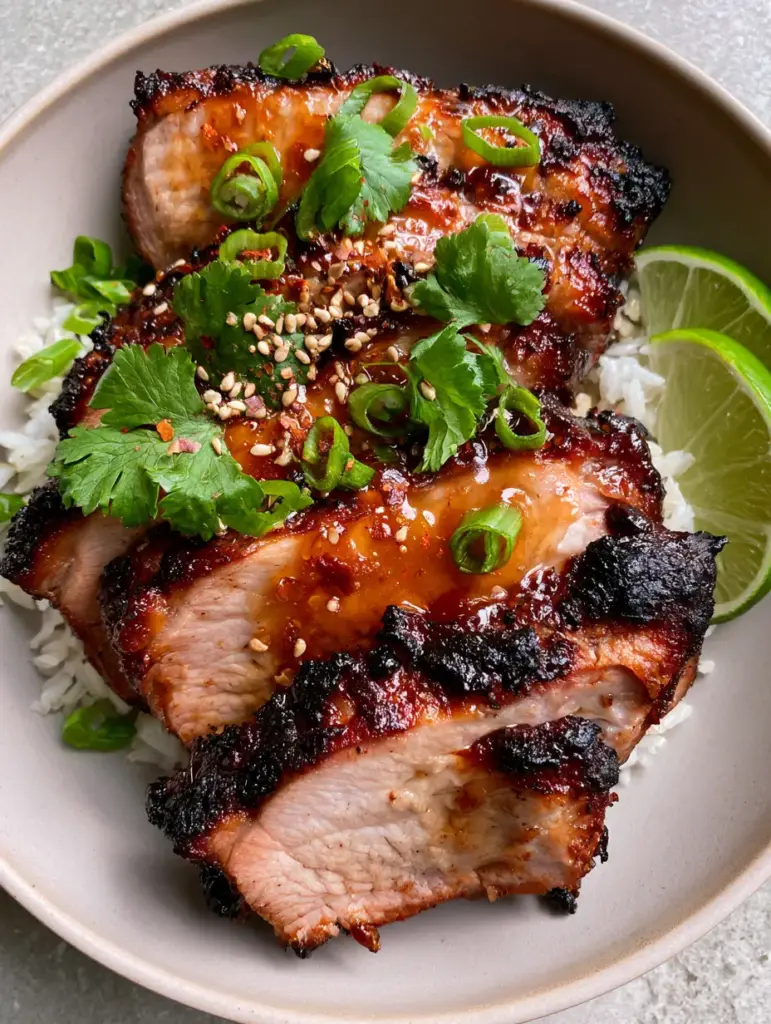
There is a specific culinary magic that happens when high-heat searing meets a high-sugar citrus reduction. This Ginger Lime Pork isn’t just a meal; it is a masterclass in texture and contrast, designed to stop the scroll with its glistening, translucent amber glaze and deeply caramelized edges.
When you look at a plate of this pork, you aren’t just seeing meat; you are seeing the result of the Maillard reaction taken to its flavorful limit. The thick-cut slices of tenderloin boast a crust that is almost candy-like in its crunch, while the interior remains a perfect, succulent pale pink.
This recipe was developed to bridge the gap between high-end restaurant plating and the comfort of a home-cooked meal. By balancing the sharp acidity of fresh lime with the spicy warmth of grated ginger, we create a profile that is both refreshing and deeply savory, perfectly suited for a bed of fluffy jasmine rice.
Why This Sticky Ginger Lime Pork Works Every Single Time
- The Texture Contrast: You get a shattering crispness on the charred edges of the tenderloin that gives way to a moist, buttery interior.
- Visual Brilliance: The amber glaze is intentionally translucent, allowing the sear of the meat to shine through while providing that “wet” look essential for professional food styling.
- Aromatic Depth: Using both fresh lime juice and lime zest ensures the citrus notes are multi-dimensional, hitting both the front and back of the palate.
- Balanced Heat: The inclusion of dried red chili flakes provides a gentle back-end warmth that cuts through the sweetness of the honey-based glaze.
Essential Components for the Ultimate Citrus-Infused Glaze
To achieve that signature “sticky and wet” look described in our visual blueprint, every ingredient in this list serves a structural and flavor-driven purpose. We do not use fillers; we use flavor-concentrates.
Pork Tenderloin: Choose a 1.5 lb (680g) tenderloin rather than a loin roast. The tenderloin’s smaller diameter allows for quicker cooking and a higher ratio of charred crust to tender meat in every slice.
Fresh Ginger Root: You will need about 2 tbsp (12g) of finely grated ginger. Fresh ginger contains enzymes that help tenderize the meat while providing a pungent, spicy kick that dried powder simply cannot replicate.
Fresh Lime Juice and Zest: You’ll need 3 tbsp (45ml) of juice and 1 tbsp (6g) of zest. The zest carries the essential oils for aroma, while the juice provides the acid necessary to balance the sugars in the glaze.
Honey or Light Brown Sugar: 1/3 cup (80ml) is required to create the “sticky amber” finish. These sugars caramelize at high temperatures, creating the charred, crispy edges we are looking for.
Soy Sauce: 2 tbsp (30ml) provides the “umami” backbone and the salt required to season the meat deeply. It also contributes to the dark amber color of the final reduction.
Garlic: 3 cloves (15g), minced finely. Garlic adds a savory depth that grounds the brighter notes of the ginger and lime.
Neutral Oil: 2 tbsp (30ml) of avocado or grapeseed oil. You need an oil with a high smoke point to achieve that deep sear without the oil breaking down and tasting bitter.
The Garnish Ensemble: Sliced scallions, fresh cilantro, toasted white sesame seeds, and dried red chili flakes. These aren’t just for show; they provide the final layers of crunch, freshness, and heat.
Professional Tools for a Flawless Sear
To replicate the professional food styling seen in the visuals, the equipment you use is just as important as the ingredients. You cannot achieve charred edges in a crowded, thin-bottomed pan.
A heavy-bottomed cast iron skillet or a high-quality stainless steel pan is non-negotiable. These materials retain heat efficiently, preventing the pan’s temperature from dropping when the cold meat hits the surface.
You will also need a microplane for the ginger and lime zest. A fine grate ensures these aromatics dissolve into the glaze rather than leaving large, woody chunks in your sauce.
Step-by-Step Evolution of the Ginger Lime Pork
Preparing the Pork and Infusing Flavor
Begin by patting your pork tenderloin completely dry with paper towels. Any moisture on the surface of the meat will create steam, preventing the formation of that beautiful, crispy crust.
Season the pork liberally with salt and black pepper. While the glaze has soy sauce, the meat itself needs internal seasoning to stand up to the bold citrus flavors.
Mastering the High-Heat Sear
Heat your 2 tbsp (30ml) of oil in the skillet over medium-high heat until it begins to shimmer and just starts to smoke. Carefully lay the pork tenderloin into the pan.
Sear the pork for 3-4 minutes per side without moving it. You are looking for a deep, golden-brown crust to form—this is the foundation of the charred edges seen in the visual prompt.
Once seared on all sides, reduce the heat to medium. This ensures the meat cooks through to a moist pale pink (an internal temperature of 145°F / 63°C) without burning the exterior.
Creating the Sticky Amber Glaze
While the pork is finishing, whisk together the lime juice, zest, honey, soy sauce, grated ginger, and minced garlic in a small bowl. This is the liquid gold that will transform the dish.
Pour the mixture directly into the skillet with the pork. The sauce will bubble violently as the sugars begin to reduce and the lime juice deglazes the pan, picking up all the flavorful browned bits.
Spoon the glaze repeatedly over the pork as it thickens. Continue this for 2-3 minutes until the glaze is “glistening and translucent” and clings tightly to the meat.
The Essential Resting Period
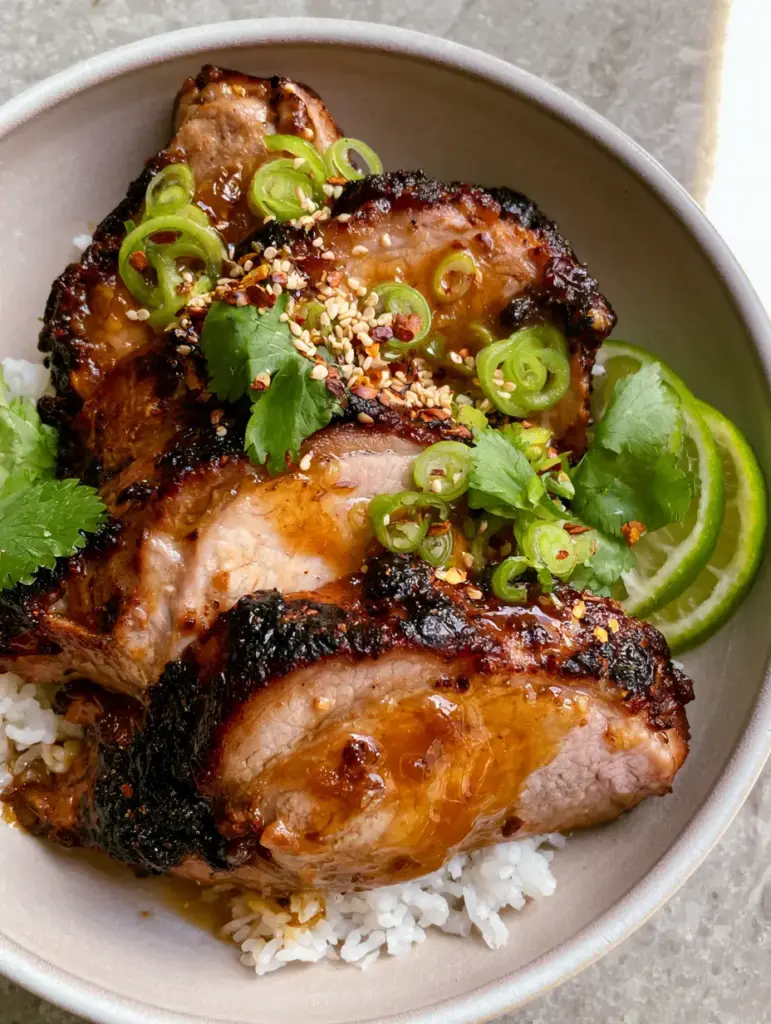
Remove the pork from the pan and let it rest on a cutting board for at least 8 minutes. This allows the juices to redistribute, ensuring the meat stays “visibly moist” when sliced.
Once rested, cut the pork into thick, 1-inch (2.5cm) slices. You should see a beautiful contrast between the dark, sticky exterior and the pale pink center.
Expert Tips for Success
- Don’t Overcrowd: If you are doubling the recipe, sear the pork in batches. Overcrowding the pan lowers the temperature and leads to gray, boiled meat instead of charred edges.
- The Gloss Factor: If your glaze looks too thick or matte, add a teaspoon of water or lime juice at the very end to loosen it and restore that “wet” look.
- Rice Prep: Rinse your jasmine rice at least three times before cooking. This removes excess starch, resulting in the “fluffy white” individual grains seen in the bowl.
- Internal Temperature: Use an instant-read thermometer. For the pale pink interior described, pull the pork at 140°F (60°C); it will rise to the perfect 145°F (63°C) during the rest.
Preserving the Perfection: Storage and Reheating
This Ginger Lime Pork is best served fresh to maintain the texture of the charred edges, but it does store well. Place leftovers in an airtight container in the refrigerator for up to 3 days.
When reheating, avoid the microwave if possible, as it can toughen the pork. Instead, warm the slices in a skillet over low heat with a splash of water to loosen the glaze and keep the meat moist.
This recipe does not freeze particularly well once sliced, as the delicate texture of the glaze and the moistness of the pork will be compromised during the thawing process.
Curating the Perfect Plate: What to Serve Beside This Dish
The bold, citrusy profile of this pork pairs beautifully with other vibrant, fresh flavors. To keep the meal within the same flavor family, consider serving it alongside Vietnamese glass noodle salad for a light, refreshing contrast.
If you prefer more fruit-forward pairings, an avocado mango salad offers a creamy texture that balances the “sticky and wet” glaze of the pork. For those who love a variety of Asian dinner recipes, this pork serves as an excellent centerpiece to a multi-course spread.
If you have leftover ginger and garlic, you might also enjoy our ginger garlic chicken thigh bake later in the week for a similar but distinct flavor profile.
Frequently Asked Questions
Fresh lime juice is highly recommended. Bottled juice lacks the bright, floral notes of fresh citrus and won’t provide the zest which is crucial for the aromatic profile of the glaze.
While you can, pork tenderloin is much more tender and has a smaller diameter, which is essential for achieving the high ratio of charred crust to meat seen in this recipe. If using loin, increase cook time and slice thinner.
The ‘wet’ look comes from the honey and lime reduction. If the sauce becomes too thick or tacky, whisk in a teaspoon of warm water or lime juice just before serving to restore the translucent shine.
Yes! The USDA recommends an internal temperature of 145°F (63°C) for pork. At this temperature, the meat is safe, incredibly moist, and naturally pale pink.
Use a microplane or the smallest holes on a box grater. To make it easier, you can freeze the ginger root first and grate it while frozen; this prevents the ginger from becoming stringy.
The Ultimate Ginger Lime Pork Recipe Card
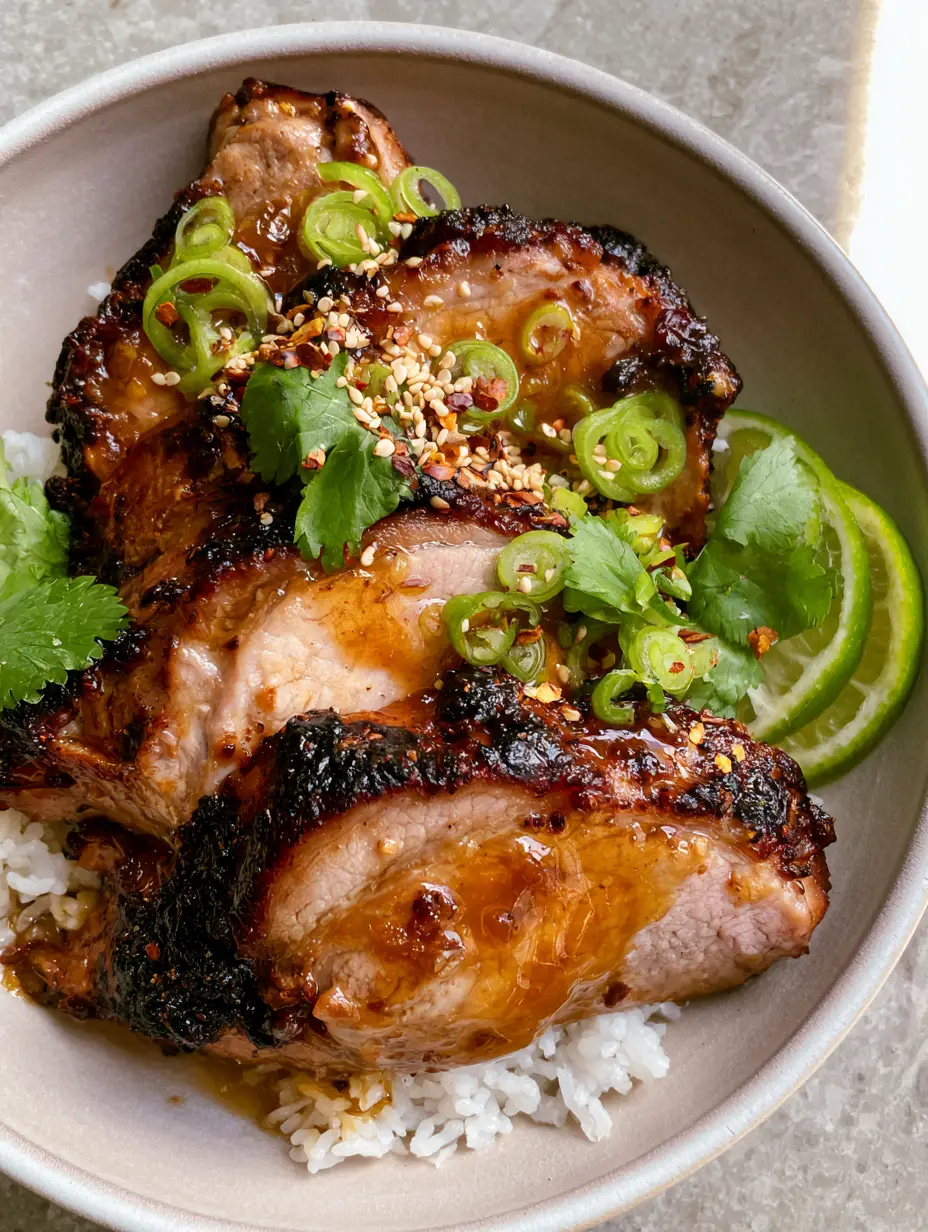
Ginger Lime Pork with Sticky Amber Glaze and Crispy Charred Edges
Ingredients
Equipment
Method
- Pat the pork dry and season liberally with salt and pepper.
- In a heavy skillet, heat oil over medium-high heat. Sear the pork for 3-4 minutes per side until a deep charred crust forms.
- Lower heat to medium and pour in the whisked glaze ingredients. Simmer and baste the pork until the sauce is thick, sticky, and amber-colored.
- Transfer pork to a board and rest for 8 minutes before slicing into thick rounds to reveal the pale pink interior.
Notes
Resting the meat is the secret to keeping it visibly moist.
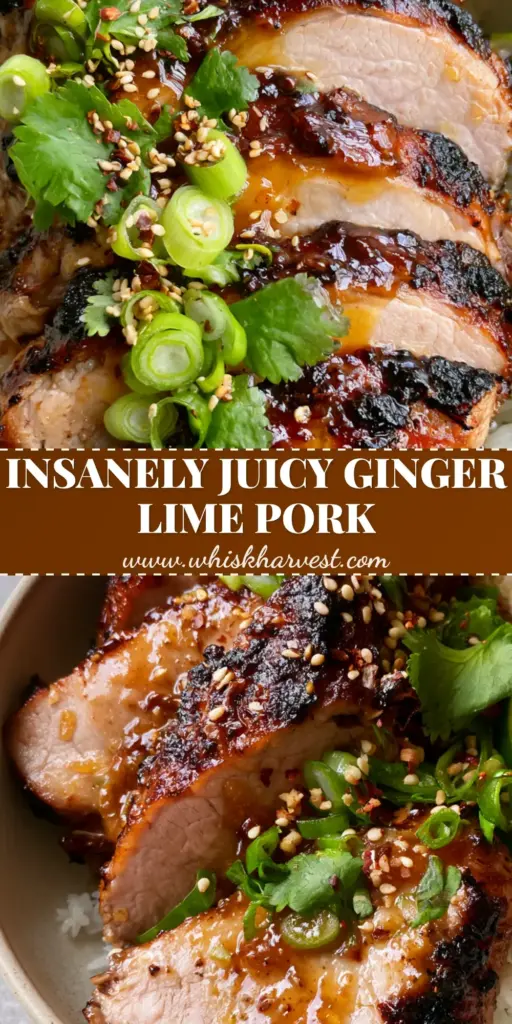
Closing & Call to Action
This Ginger Lime Pork is the ultimate solution for when you want a meal that feels intentional, sophisticated, and visually stunning without spending hours in the kitchen. The combination of charred, crispy edges and that sticky amber glaze is a sensory experience you’ll want to recreate again and again.
Did you achieve that perfect pale pink center? We want to hear about it! Leave a comment below and tell us how yours turned out. Don’t forget to save this recipe to your favorite boards on Pinterest so you never lose the secret to the perfect sear.