There is something deeply primal and comforting about the sizzle of well-seasoned meat meeting the velvet embrace of a nutty sauce. This tahini kofta is the embodiment of Middle Eastern soul food, elevated for the modern home cook who appreciates both aesthetic beauty and culinary depth.
Inspired by the traditional “Kofta bi Tahini,” this dish transforms humble ground beef into charred, juicy oblong logs that nestle perfectly within a pale-beige, lemon-brightened tahini gravy. It is a masterpiece of textures, from the crunch of toasted pine nuts to the explosive pop of fresh pomegranate seeds.
Whether you are hosting an intimate dinner party or looking for a weeknight meal that breaks the routine, this recipe delivers a restaurant-quality experience right from your oven. The visual contrast between the deep-seared beef and the vibrant garnishes makes it an absolute showstopper.
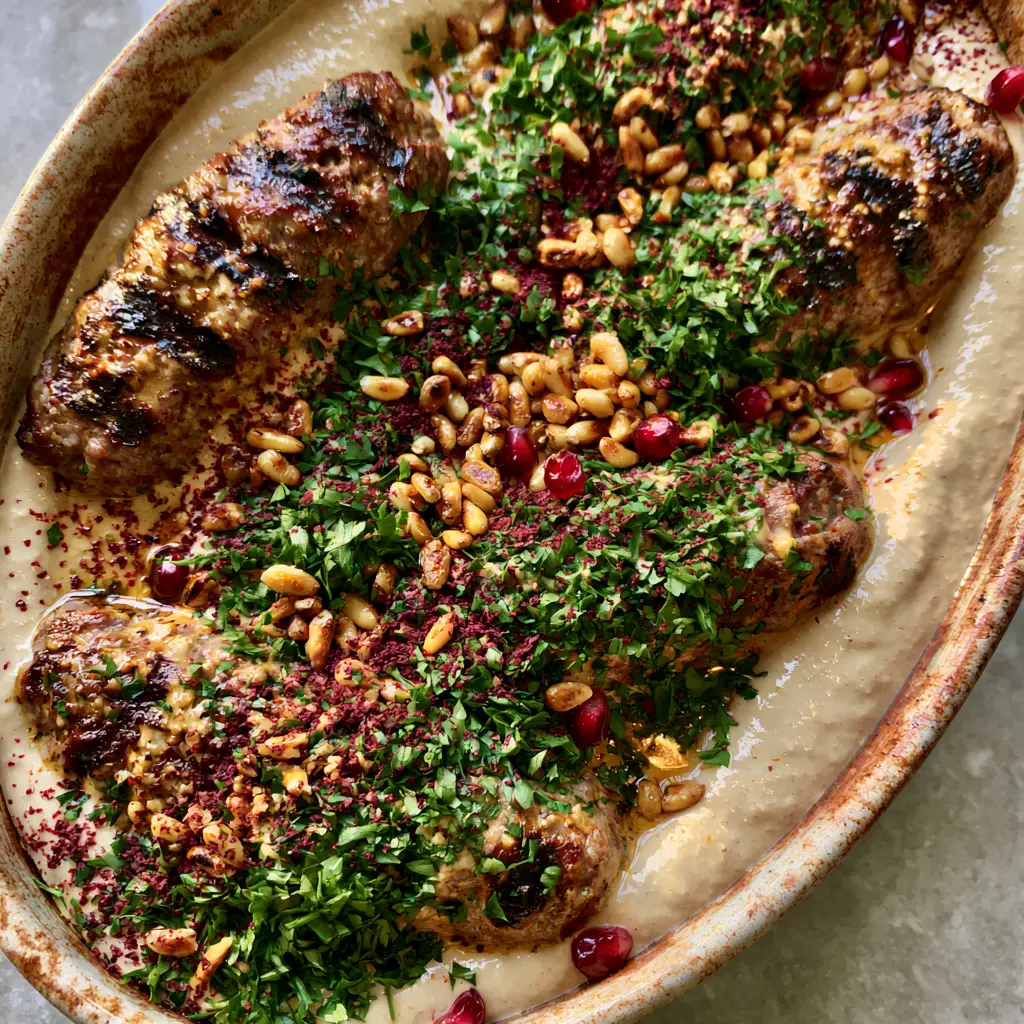
Why This Creamy Beef Kofta Recipe Works Every Single Time
- The Maillard Magic: By searing the kofta logs before baking, we develop a rich, charred crust that provides a smoky counterpoint to the creamy sauce.
- Velvety Sauce Consistency: Our specific ratio of tahini to lemon and water ensures a thick, pourable sauce that clings to the meat without breaking or becoming oily.
- Structural Integrity: Using the right fat-to-lean ratio in the beef ensures the logs remain juicy and tender while maintaining their distinct oblong shape during the high-heat sear.
- Flavor Complexity: The combination of warm spices like cumin and coriander with the bright acidity of sumac and pomegranate creates a balanced, multi-dimensional palate.
The Flavor-Packed Pantry: Essential Ingredients and Substitutions
To achieve the specific visual and flavor profile of this tahini kofta, every ingredient plays a vital role. Quality matters, especially when dealing with tahini, which serves as the backbone of the dish.
Ground Beef (85/15 Lean): You need a bit of fat (around 15%) to ensure the kofta logs remain “juicy” as described in our visual blueprint. Use 1 lb (450g) of freshly ground chuck for the best results. You could also use a 50/50 mix of beef and lamb if you prefer a more traditional, gamey flavor profile similar to other global meat dishes.
High-Quality Tahini: Look for a brand that is smooth, runny, and not overly bitter. You will need 1/2 cup (120ml) of pure sesame paste to create that “thick velvety” texture. If your tahini has separated in the jar, be sure to whisk it thoroughly before measuring.
Fresh Parsley: This isn’t just a garnish; it adds a herbaceous lift to the meat itself. We use 1/2 cup (15g) of finely chopped flat-leaf parsley. Save some extra for that “vibrant green” finishing touch mentioned in our Midjourney prompt.
Warm Spice Blend: A combination of 1 tsp (5g) ground cumin, 1 tsp (5g) ground coriander, and 1/2 tsp (2.5g) allspice provides the classic Middle Eastern aroma. These spices bloom in the fat of the beef as it sears.
Toasted Pine Nuts: These provide the “golden” visual cue and a buttery crunch. 2 tbsp (20g) is sufficient, but feel free to be generous. If you are out of pine nuts, slivered almonds are an excellent textural substitute.
Crimson Sumac and Pomegranate: These are our “visual bridge” ingredients. Sumac provides a citrusy zing, while the ruby-red seeds offer a sweet-tart burst that cuts through the richness of the tahini.
Must-Have Kitchen Tools for the Perfect Kofta
To replicate the “rustic ceramic baking dish” look from our visual guide, you will need a 9×13 inch (23x33cm) ceramic or stoneware vessel. Ceramic holds heat evenly, which is crucial for thickening the sauce without burning the bottom.
A heavy-bottomed cast iron skillet is the best tool for achieving those “distinct charred grill marks.” The high thermal mass of cast iron ensures the meat sears instantly rather than steaming in its own juices.
Finally, a sturdy wire whisk is essential for the tahini sauce. Tahini has a unique property where it initially seizes up when liquid is added; a whisk helps you emulsify it into a smooth, “pale-beige” velvet.
How to Make Tahini Kofta: A Step-by-Step Masterclass
Crafting and Shaping the Beef Logs
In a large mixing bowl, combine your ground beef, finely grated onion, minced garlic, chopped parsley, and the dry spice blend. Do not overwork the meat; mix just until the ingredients are distributed. Over-mixing leads to a dense, rubbery texture rather than the “juicy texture” we are aiming for.
Divide the mixture into 8-10 equal portions. Roll each portion between your palms to form an oblong log, roughly 3-4 inches (8-10cm) in length. Chill these in the refrigerator for 15 minutes to help them hold their shape during the sear.
Achieving the Perfect Charred Sear
Heat 1 tbsp (15ml) of neutral oil in your cast iron skillet over medium-high heat. Once the oil is shimmering and slightly smoking, add the kofta logs in batches. Do not crowd the pan.
Sear the logs for 2-3 minutes per side. You are looking for a deep, dark brown crust with visible char marks. The meat does not need to be cooked through at this stage, as it will finish in the oven. Transfer the seared logs to your rustic ceramic baking dish.
Whisking the Velvety Tahini Sauce
In a separate bowl, whisk together the tahini, 1/4 cup (60ml) fresh lemon juice, and 1/2 cup (120ml) warm water. At first, the sauce will look grainy and thick. Continue whisking vigorously until it transforms into a smooth, pale-beige emulsion. Season with a pinch of salt and cracked black pepper.
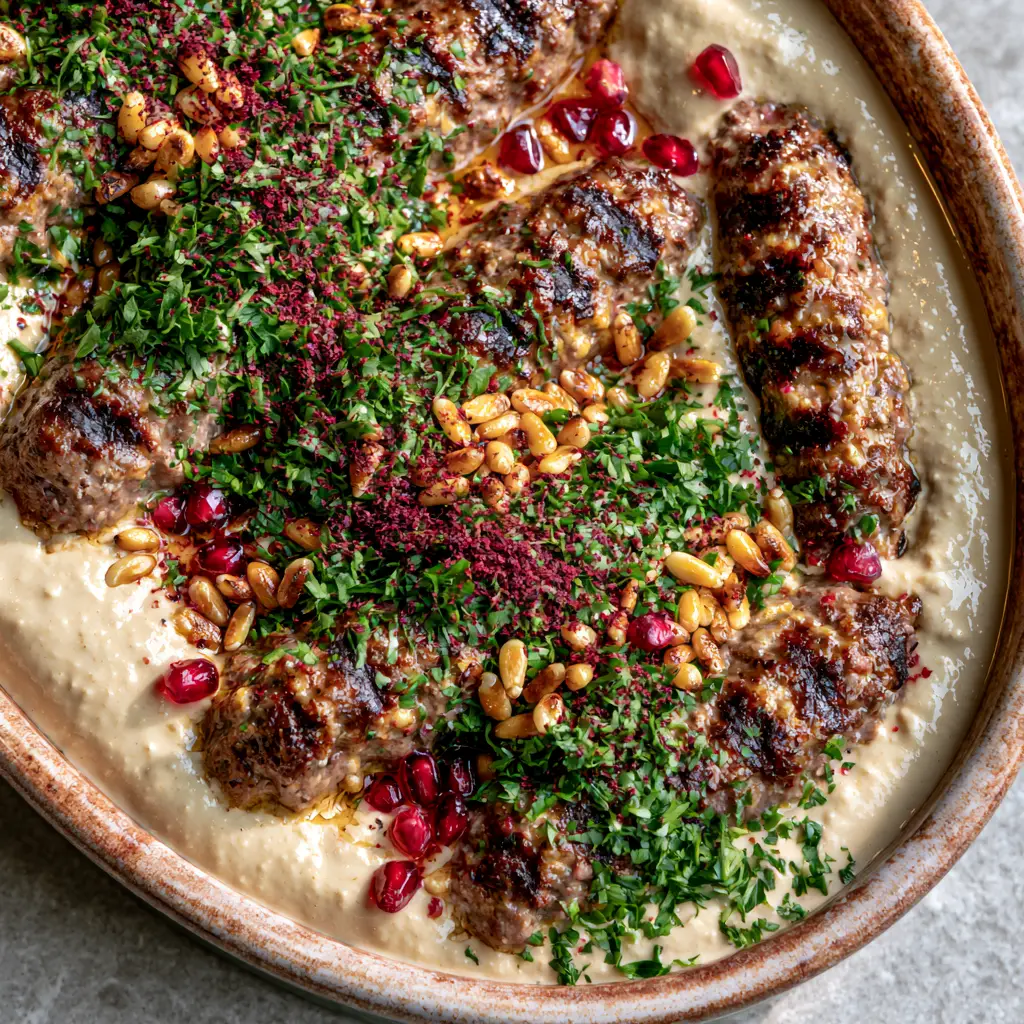
Pour the sauce over the kofta logs in the ceramic dish. They should be “partially submerged,” leaving the charred tops visible for a beautiful presentation. This setup is perfect if you are serving a side of crispy sliced potatoes to soak up the extra sauce.
The Final Bake and Garnish
Place the dish in a preheated oven at 400°F (200°C) for 15-20 minutes. The sauce should be bubbling gently and the meat should be fully cooked. While the kofta bakes, toast your pine nuts in a small pan until they are “toasted golden.”
Once out of the oven, the real magic happens. Sprinkle the “vibrant green” parsley generously over the top. Follow with the golden pine nuts, a heavy dusting of “crimson sumac,” and the “ruby-red pomegranate seeds.” Finish with a final crack of black pepper.
Expert Tips for Kofta Success
- Don’t Skip the Sear: The flavor of tahini kofta relies heavily on the Maillard reaction. That charred exterior provides the “smoky” depth that balances the creamy sauce.
- Temperature Control: If your tahini sauce looks like it’s separating in the oven, it’s likely too hot. Ensure your oven is calibrated. If it does break, a small splash of warm water and a gentle stir can often bring it back.
- Pomegranate Hack: To get those “ruby-red” seeds without the mess, submerge the pomegranate halves in a bowl of water while you prize the seeds out. The pith floats, and the seeds sink!
- Squeeze Fresh: Never use bottled lemon juice for the tahini sauce. The fresh enzymes in real lemon juice are what cause the tahini to thicken into that “velvety” texture.
Storage, Reheating, and Make-Ahead Advice
This dish is best served fresh to maintain the texture of the garnishes, but it does store well. Keep leftovers in an airtight container in the refrigerator for up to 3 days. The sauce will thicken significantly when cold.
When reheating, add a tablespoon of water to the dish to loosen the tahini sauce. Microwave on medium power or reheat in a 350°F (175°C) oven until the meat is warmed through. Avoid high heat during reheating, as it can cause the tahini to become oily.
You can prepare the kofta logs a day in advance and store them uncooked in the fridge. This makes the final assembly very quick for a busy weeknight, much like preparing ginger lime pork or other pre-marinated proteins.
What to Serve With Your Tahini Kofta
This dish is incredibly rich, so it pairs best with items that can absorb the sauce or provide a crisp contrast. A simple side of vermicelli rice or warm pita bread is traditional. For a lighter option, a bright avocado mango salad offers a tropical acidity that cuts through the sesame oils beautifully.
If you want to keep the meal hearty and comforting, consider serving it alongside crispy sliced potatoes. The contrast between the soft, tahini-soaked meat and the crunchy potato edges is divine. For those who enjoy a bit of heat, a side of pickled peppers or a spicy zhug sauce is highly recommended.
Frequently Asked Questions
You can shape and sear the meat logs up to 24 hours in advance. Store them in the fridge and prepare the fresh tahini sauce just before you are ready to bake and serve.
Yes, but poultry is much leaner and may dry out. To keep turkey or chicken kofta juicy, add a tablespoon of olive oil or Greek yogurt to the meat mixture and reduce the searing time slightly.
While the dish will still be delicious without it, sumac provides a unique, astringent citrus flavor and a beautiful crimson color that balances the richness of the tahini. It is highly recommended for an authentic experience.
Look for Ethiopian or Lebanese tahini brands labeled ‘100% hulled sesame seeds.’ It should have a pourable, runny consistency. Avoid brands that look dry or chunky at the bottom of the jar.
Tahini sauce can break if the oven temperature is too high or if the ratio of fat to liquid is off. Ensure you use fresh lemon juice and warm water to create a stable emulsion before baking, and stick to the 400°F (200°C) temperature.
The Master Recipe: Authentic Tahini Kofta
Tahini Kofta: The Ultimate Creamy Middle Eastern Beef Bake
Ingredients
Equipment
Method
- In a bowl, combine beef, grated onion, garlic, parsley, and spices. Shape into 10 oblong logs.
- In a hot cast iron skillet, sear the logs until they show distinct charred grill marks and a deep brown crust.
- Whisk tahini, lemon juice, and warm water until a thick, creamy pale-beige sauce forms.
- Place kofta in a ceramic dish, pour sauce over, and bake at 400°F (200°C) for 15-20 minutes.
- Top with vibrant parsley, golden pine nuts, crimson sumac, and ruby pomegranate seeds before serving.
Notes
Ensure the beef has at least 15% fat for maximum juiciness.
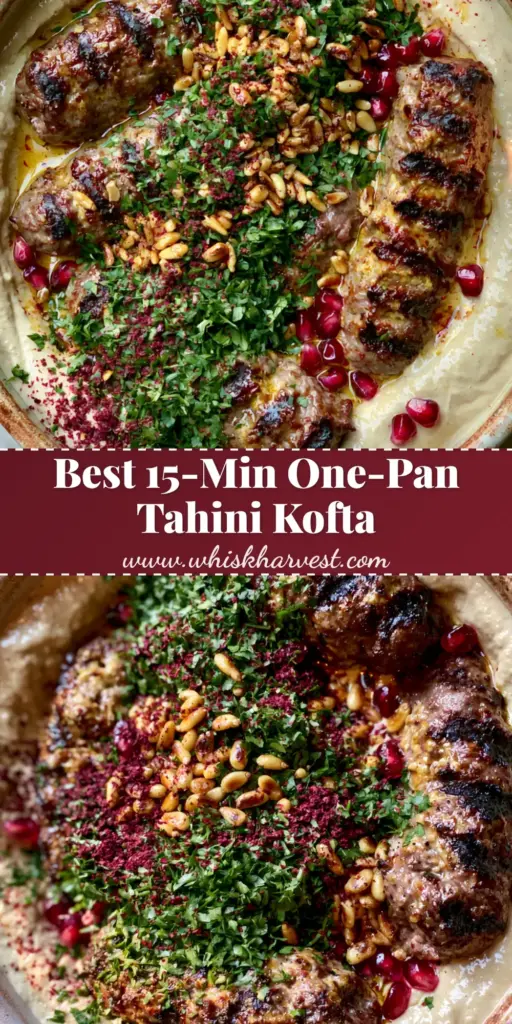
Bring the Flavors of the Middle East Home
This tahini kofta is more than just a meal; it is a sensory journey. From the vibrant colors of the pomegranate and sumac to the deep, earthy richness of the tahini, every bite tells a story of tradition and flavor. We hope this becomes a staple in your kitchen!
If you enjoyed this recipe, please leave a comment below and let us know how yours turned out! Don’t forget to follow us and pin this recipe to your favorite boards on Pinterest so you never lose it.