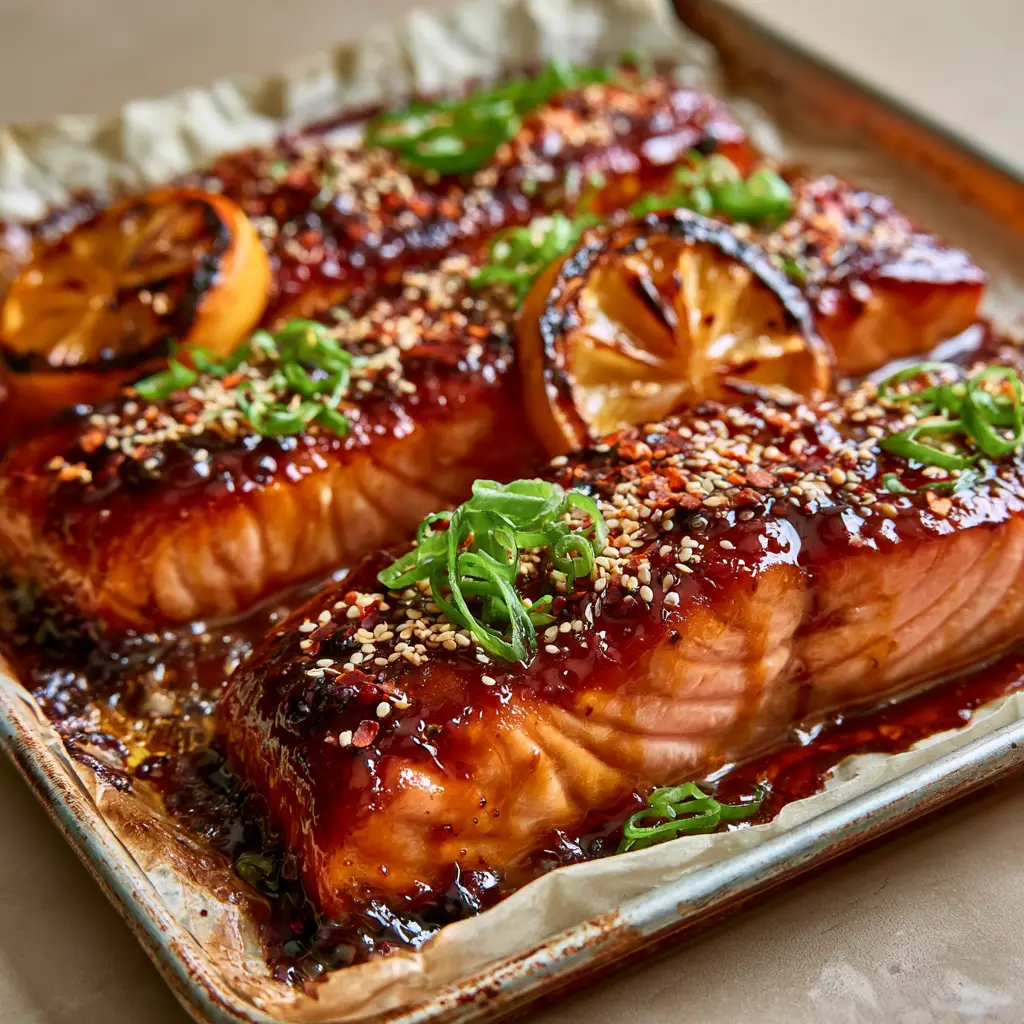
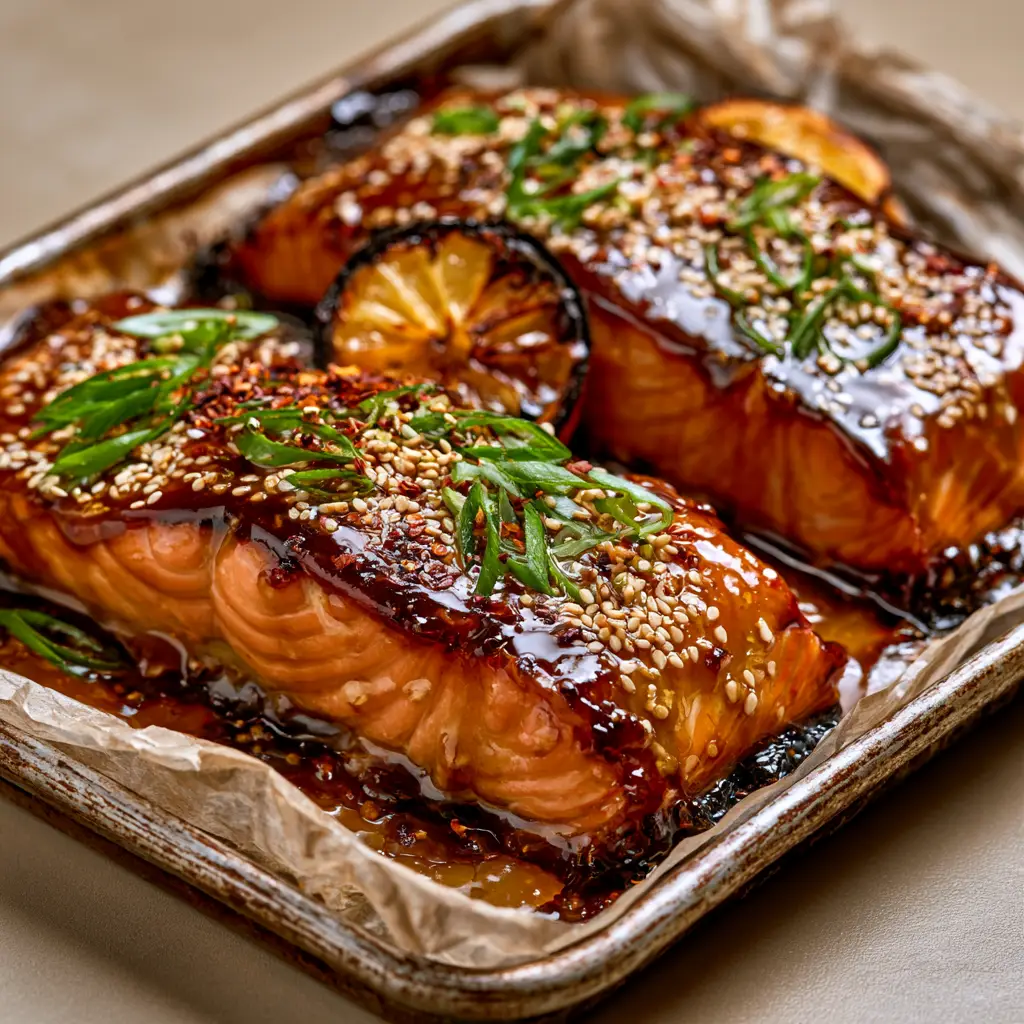
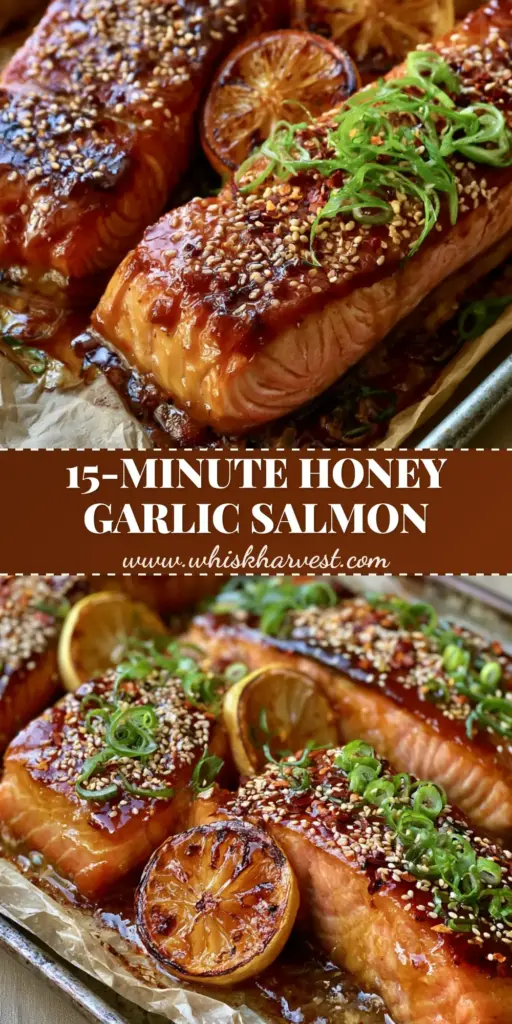
When it comes to a show-stopping weeknight dinner, nothing commands the table quite like this Baked Salmon. Imagine three thick Atlantic salmon fillets, their deep pink interior layers yielding perfectly to a fork, glistening under a thick, amber-hued honey garlic glaze. The edges of the glaze bubble and caramelize against the heat, creating a sticky, savory-sweet crust that is absolutely irresistible.
This recipe isn’t just about the fish; it’s about the textural symphony of toasted white sesame seeds, the bite of fresh green onions, and a subtle heat from red pepper flakes. Tucked between the fillets, charred lemon halves release a concentrated, smoky citrus juice that cuts through the richness of the honey. It is a visual and culinary masterpiece designed for the modern home cook.
Whether you are hosting a small dinner party or looking for a high-protein meal that feels like a restaurant luxury, this Baked Salmon delivers. We’ve optimized every step to ensure your kitchen smells of toasted garlic and sweet citrus, mirroring the authentic food blog aesthetic of a handheld smartphone photo taken in soft, natural window light.
Why This Honey Garlic Baked Salmon Is a Game Changer
- The Perfect Flake: By controlling the oven temperature and using thick Atlantic fillets, we achieve that coveted deep pink, moist interior that pulls apart in clean layers.
- Amber Caramelization: Our honey garlic sauce is engineered to bubble at the edges, providing a professional “charred” look without overcooking the delicate fish.
- Complex Flavor Profile: The combination of toasted sesame, sharp scallions, and caramelized lemon creates a multidimensional taste experience that goes far beyond a standard sheet pan meal.
- Minimal Cleanup: Using crumpled parchment paper on a weathered metal baking sheet isn’t just for the rustic aesthetic—it makes cleanup nearly instantaneous.
The Secret Pantry Essentials for This Sticky Glaze
To achieve the visual and textural results seen in our professional culinary blueprint, each ingredient serves a specific forensic purpose. We don’t just season; we build layers of flavor and color.
Thick Atlantic Salmon Fillets: You’ll need approximately 1.5 lbs (680g) of salmon, ideally cut into three thick fillets. Thick-cut salmon stands up better to the high-heat caramelization process without drying out in the center.
Raw Honey: Use 1/3 cup (80ml) of high-quality honey. This is the primary sugar source that creates the “bubbling and caramelized” edges described in our visual prompt.
Fresh Garlic: 4 cloves (approx. 20g) of finely minced garlic. The garlic toasts within the honey glaze, providing those tiny, savory aromatic bits that cling to the fish.
Fresh Lemons: You will need 2 large lemons. One is juiced for the glaze, while the other two halves are charred directly on the pan to intensify their natural sugars.
Foundational Fats: 2 tbsp (30ml) of neutral oil or melted unsalted butter. This “invisible” ingredient is scientifically required to emulsify the glaze and prevent the salmon from sticking to the parchment.
The Garnish Trio: 1 tbsp (9g) toasted white sesame seeds, 2 thinly sliced green onions (scallions), and 1/2 tsp (1g) red pepper flakes. These provide the high-resolution visual contrast and a pop of freshness.
Essential Tools for the Perfect Sheet Pan Result
To replicate the authentic food blog aesthetic, the equipment is just as important as the ingredients. You will need a weathered metal baking sheet, which conducts heat more aggressively than shiny new pans, helping the glaze to darken at the edges.
Additionally, crumpled parchment paper is a must. By crumpling the paper before flattening it out, you create small ridges and valleys that catch the stray glaze, allowing it to pool and caramelize into “candy” bits rather than just running off the sides.
A high-quality pastry brush is also recommended. This allows you to apply a “heavy” layer of the honey garlic sauce, ensuring every crevice of the flaky salmon is saturated with flavor before it hits the oven.
A Step-by-Step Guide to Achieving That Perfect Caramelized Char
Preparing the Salmon and the Weathered Pan
Start by preheating your oven to 400°F (200°C). While the oven heats, take your parchment paper and crumple it into a tight ball, then smooth it back out over your metal baking sheet.
Pat the salmon fillets extremely dry with paper towels. Removing surface moisture is the secret to ensuring the honey glaze sticks to the fish rather than sliding off into a watery mess.
Whisking the Amber Honey Garlic Glaze
In a small bowl, combine the honey, minced garlic, 1 tbsp (15ml) of lemon juice, and a pinch of salt and black pepper. Whisk vigorously until the honey is fully incorporated with the aromatics.
If your honey is too thick, microwave it for 10 seconds. You want a consistency that is viscous but spreadable—think of a thick maple syrup that will cling to the salmon layers.
The First Bake and the Lemon Char
Place the salmon fillets on the parchment paper, leaving space between them. Tuck the two lemon halves, cut-side down, directly onto the metal surface between the fillets.
Brush half of the glaze generously over the salmon. Bake for 8-10 minutes. You are looking for the internal temperature to reach about 125°F (52°C) at this stage; the fish will finish under the broiler.
The Broiler Finish for Visual Perfection
Switch your oven to the “Broil” setting on high. Brush the remaining glaze over the fillets, ensuring a thick coating. Slide the tray back in, ideally 4-5 inches from the heat source.
Watch closely for 2-3 minutes. You want to see the glaze start to bubble vigorously and turn a deep amber-brown. The lemon halves should look charred and slightly collapsed. This is where the “glistening highlights” from our visual prompt are created.
Expert Tips for Success from a Professional Kitchen
- Temper Your Fish: Take the salmon out of the fridge 15 minutes before cooking. This ensures the center warms through perfectly while the exterior caramelizes.
- The “Flake” Test: Use a fork to gently press the side of the fillet. If the layers separate easily (showing that deep pink interior), it is done. Avoid over-broiling, which can lead to white albumin (protein) leaching out.
- Toasting the Seeds: If your sesame seeds aren’t pre-toasted, toss them in a dry pan for 2 minutes until they smell nutty. This adds a critical layer of flavor that raw seeds lack.
- Slicing Scallions: Slice your green onions on a sharp bias (diagonal). This creates the “bright green” professional look that contrasts beautifully against the amber glaze.
Optimal Storage and Reheating Methods
Baked Salmon is best enjoyed immediately to appreciate the contrast between the sticky crust and the tender interior. However, leftovers can be stored in an airtight container in the refrigerator for up to 3 days.
To reheat without drying out the fish, place it in a 275°F (135°C) oven with a splash of water or extra honey, covered with foil, until just warmed through. Avoid the microwave, as it will toughen the delicate protein fibers.
Freezing cooked salmon is possible but not recommended for this specific recipe, as the honey glaze can become watery upon thawing, losing its signature bubbling texture.
Incredible Pairings to Complete Your Meal
This salmon is a versatile protein that pairs beautifully with a variety of textures. For a light, vibrant side, try this Vietnamese glass noodle salad which mirrors the Asian-inspired aromatics of the garlic and sesame.
If you prefer something heartier, these crispy sliced potatoes provide a wonderful crunch that complements the flakiness of the fish. For those looking to keep the meal within the “Asian-inspired” realm, our collection of Asian dinner recipes offers several vegetable-heavy pairings.
Don’t forget that this glaze also works remarkably well on poultry. If you enjoy this flavor profile, you’ll love our ginger garlic chicken thigh bake for your next meal prep session.
Frequently Asked Questions Regarding Baked Salmon
Yes, but ensure it is completely thawed and patted extremely dry with paper towels. Excess moisture from frozen fish will prevent the honey garlic glaze from caramelizing properly.
The salmon is done when it reaches an internal temperature of 145°F (63°C), but for the best texture, pull it at 135°F (57°C) as it will continue to cook. Visually, the meat should be opaque and flake easily with a fork.
We recommend leaving the skin on during baking as it acts as a thermal barrier, keeping the fish moist. You can easily slide the fillet off the skin when serving.
Atlantic salmon is excellent for this recipe due to its higher fat content, which keeps it moist under the high heat of the broiler. King (Chinook) salmon is also a premium choice.
This usually happens if the oven isn’t hot enough or the fish was too wet. Ensure you use the broiler for the final 2-3 minutes and pat the salmon dry before glazing.
The Ultimate Honey Garlic Baked Salmon Recipe Card
Baked Salmon with Sticky Honey Garlic Glaze and Caramelized Lemons
Ingredients
Equipment
Method
- Preheat oven to 400°F (200°C). Crumple a piece of parchment paper into a ball, flatten it out, and line a weathered metal baking sheet.
- Pat the salmon fillets extremely dry with paper towels to ensure the glaze adheres properly.
- Whisk together the honey, minced garlic, 1 tbsp lemon juice, oil, salt, and pepper until emulsified.
- Place fillets on the pan with lemon halves. Brush with half the glaze. Bake for 8-10 minutes until the interior is deep pink.
- Switch to broil. Apply the remaining glaze. Broil for 2-3 minutes until the sauce is bubbling and caramelized at the edges.
- Top with a heavy sprinkle of toasted sesame seeds, sliced green onions, and red pepper flakes. Serve with the charred lemons.
Notes
Use a weathered pan for better heat distribution and superior glaze bubbling.
Conclusion: Bring This Restaurant-Quality Dish Home
Mastering this Baked Salmon is a milestone for any home cook. The combination of the thick, bubbling honey garlic glaze and the perfectly charred lemons creates a profile that is both sophisticated and comforting. It captures the essence of modern food photography—authentic, glistening, and deeply appetizing.
If you made this recipe, we want to hear about it! Did you achieve that perfect amber char? Leave a comment below and share your results. For more visual inspiration and daily recipes, follow us on Pinterest and save this pin to your favorite dinner board!