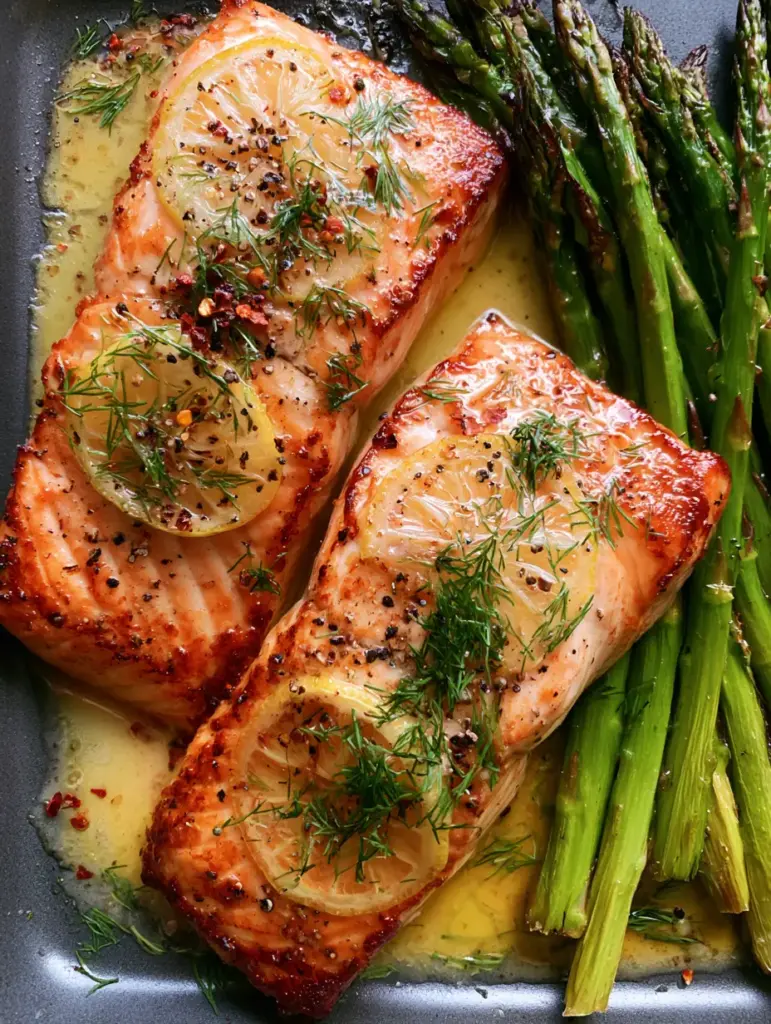
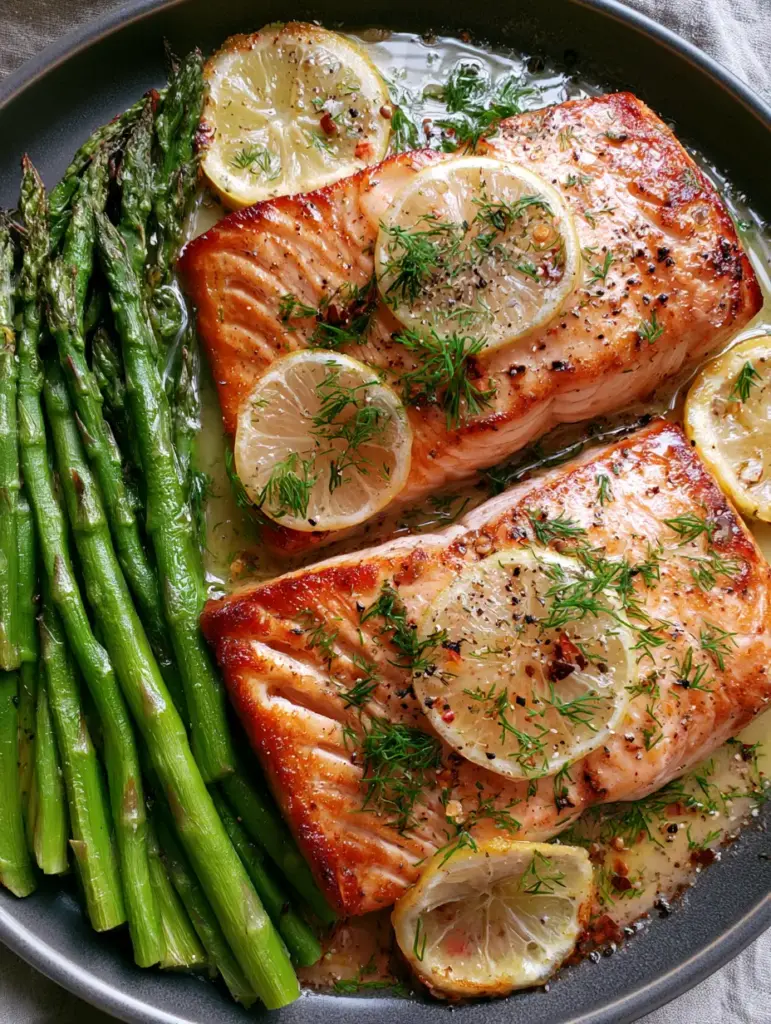
Mastering the perfect baked salmon and asparagus is a rite of passage for every home cook seeking that elusive balance of weeknight speed and “fine-dining” quality. Imagine pulling a dark matte sheet pan from the oven to find succulent Atlantic salmon fillets with distinct, flaky layers and caramelized, crispy seared edges that glisten under a glossy lemon-garlic butter glaze.
This isn’t just another sheet pan meal; it is a sensory experience where the delicate charred tips of tender-crisp asparagus meet the vibrant shimmer of a citrus-infused sauce. Whether you are meal prepping for a busy week or hosting a cozy dinner, this baked salmon and asparagus recipe delivers a high-protein, visually stunning result every single time.
The secret lies in the high-heat roasting technique, which ensures the salmon develops a deep crust while the interior remains buttery and moist, perfectly mimicking a professional kitchen sear. By finishing the dish with ultra-thin, translucent lemon wheels and a generous sprinkle of fresh herbs, you create a plate that looks as incredible as it tastes.
Why This Sheet Pan Salmon Recipe Works
- Perfect Texture Contrast: You get the flaky, tender interior of the salmon paired with the structural snap of roasted green asparagus.
- High-Impact Flavor: The combination of cracked black peppercorns and red chili flakes provides a subtle heat that cuts through the rich garlic butter.
- Visual Sophistication: The use of fresh chopped dill and sea salt creates a restaurant-style presentation that is perfect for your next social media post.
- Effortless Cleanup: By using a single sheet pan, you spend less time at the sink and more time enjoying your culinary creation.
The Essential Elements for Flaky Salmon and Charred Asparagus
Atlantic Salmon Fillets: Look for large, center-cut fillets (approximately 6 oz (170g) each) with consistent thickness to ensure even cooking and that signature flaky texture.
Fresh Asparagus Spears: Choose medium-thickness spears for the best results; they are sturdy enough to withstand high heat and develop those sought-after charred tips without becoming mushy.
Unsalted Butter (Foundational Ingredient): 2 tbsp (30g) of melted butter acts as the carrier for the garlic and lemon, creating a glossy glaze that coats the fish and vegetables beautifully.
Garlic and Lemon: 3 cloves (9g) of minced garlic and 1 large lemon provide the aromatic backbone; the lemon is used both as juice in the glaze and as thin wheels for roasting.
Finishing Garnish: Fresh chopped dill, coarse sea salt, cracked black pepper, and red chili flakes provide the “Visual Recipe Blueprint” details that elevate the dish from basic to gourmet.
Extra Virgin Olive Oil: 1 tbsp (15ml) is essential for coating the asparagus, ensuring the heat is conducted efficiently for a perfect roast.
Professional Tools for the Perfect Sear
To achieve the results seen in our photography, a dark matte grey sheet pan is highly recommended as it absorbs heat more efficiently than light-colored pans, helping to create those caramelized edges on the salmon. You will also need a sharp mandoline or chef’s knife to slice the lemon wheels so thin they become almost translucent during the baking process.
A high-quality meat thermometer is your best friend when cooking fish. Aiming for an internal temperature of 125°F (52°C) for medium-rare or 135°F (57°C) for medium ensures you never have to deal with dry, overcooked salmon again.
Step-by-Step Mastery of Baked Salmon and Asparagus
Preparing the Sheet Pan and Aromatics
Preheat your oven to 425°F (220°C). This high temperature is non-negotiable for achieving the charred tips on the asparagus and the crispy edges on the salmon. While the oven heats, whisk together your melted butter, minced garlic, and 1 tbsp (15ml) of fresh lemon juice in a small bowl.
Trim the woody ends off your asparagus. A pro tip is to snap one spear naturally; where it breaks is where the tough part ends. Line up the rest and slice them at that same point for uniform spears.
Achieving the Perfect Sear and Glaze
Place your salmon fillets in the center of the dark matte sheet pan. Pat them bone-dry with a paper towel; moisture is the enemy of caramelization. Brush the garlic butter glaze generously over the salmon, ensuring the sides are coated to encourage those crispy seared edges.
Arrange the asparagus spears around the salmon. Drizzle them with olive oil and a pinch of salt. Place your ultra-thin lemon wheels directly on top of the salmon fillets. The heat will soften the lemon skins, releasing essential oils into the glaze while creating a vibrant shimmer under the oven lights.
Roasting for Texture and Color
Slide the pan into the oven and bake for 12-15 minutes. Around the 10-minute mark, check for visual cues: the asparagus tips should be starting to brown and the salmon should appear opaque but still give slightly when pressed.
If you want even deeper caramelization, turn on the broiler for the final 60-90 seconds. Watch closely as the butter glaze starts to bubble and the edges of the salmon turn a deep, golden mahogany. This is the moment when the dish achieves its maximum visual appeal.
The Finishing Touches
Remove the pan from the oven. Immediately sprinkle the fresh chopped dill over the hot salmon. The residual heat will wake up the oils in the dill, filling your kitchen with a fresh, grassy aroma.
Finish with a generous grind of cracked black peppercorns, a pinch of red chili flakes for a pop of color and heat, and a final dusting of coarse sea salt. The salt flakes will catch the natural daylight, creating a beautiful shimmer on the finished baked salmon and asparagus.
Expert Tips for Success
- Dry the Fish: Always pat the salmon dry. Any surface moisture will cause the fish to steam rather than sear, ruining the texture of the edges.
- Room Temperature: If time allows, let your salmon sit at room temperature for 15 minutes before baking to ensure the center cooks as evenly as the outside.
- Asparagus Sizing: If your asparagus spears are very thin, add them to the pan 5 minutes after the salmon has started cooking so they don’t over-char.
- Check the Flake: Use a fork to gently pull at the thickest part of the fillet; if it separates into distinct layers easily, it is perfectly cooked.
Storage, Reheating, and Freezing
While this dish is best served fresh to maintain the “tender-crisp” texture of the asparagus, leftovers can be stored in an airtight container in the refrigerator for up to 2 days. To reheat, use a low-heat oven (300°F / 150°C) to prevent the salmon from drying out.
We do not recommend freezing this recipe once cooked, as the texture of the roasted asparagus and the delicate flake of the salmon will degrade significantly upon thawing.
What to Serve With Your Salmon
This baked salmon and asparagus is a complete meal on its own, but it also pairs beautifully with a variety of textures. For a more substantial dinner, try serving it alongside these crispy sliced potatoes or this decadent potato butter crisp for a classic meat-and-potatoes feel.
If you are looking for more seafood inspiration after mastering this dish, our baked salmon with lemon and dill offers a similar flavor profile with a different technique. For those who enjoy a bit of sweetness, the maple glazed baked salmon is a fan favorite that uses the same sheet pan method.
For a lighter, fusion-style side, consider a Vietnamese glass noodle salad which provides a refreshing acidity that complements the rich garlic butter glaze perfectly.
Frequently Asked Questions
Yes, but ensure it is completely thawed and patted extremely dry with paper towels to achieve the caramelized seared edges described.
No flipping is required. Using a dark matte sheet pan at high heat will sear the bottom while the top caramelizes under the garlic butter glaze.
Salmon is perfectly cooked when it reaches an internal temperature of 125-135°F (52-57°C) and flakes easily with a fork at the thickest part.
Absolutely. It stores well for up to 2 days, though we recommend reheating gently in the oven to preserve the textures.
Mushy asparagus is usually caused by overcrowding the pan or not using enough heat. Ensure the oven is at 425°F and spears have space for air circulation.
The Ultimate Baked Salmon and Asparagus Recipe
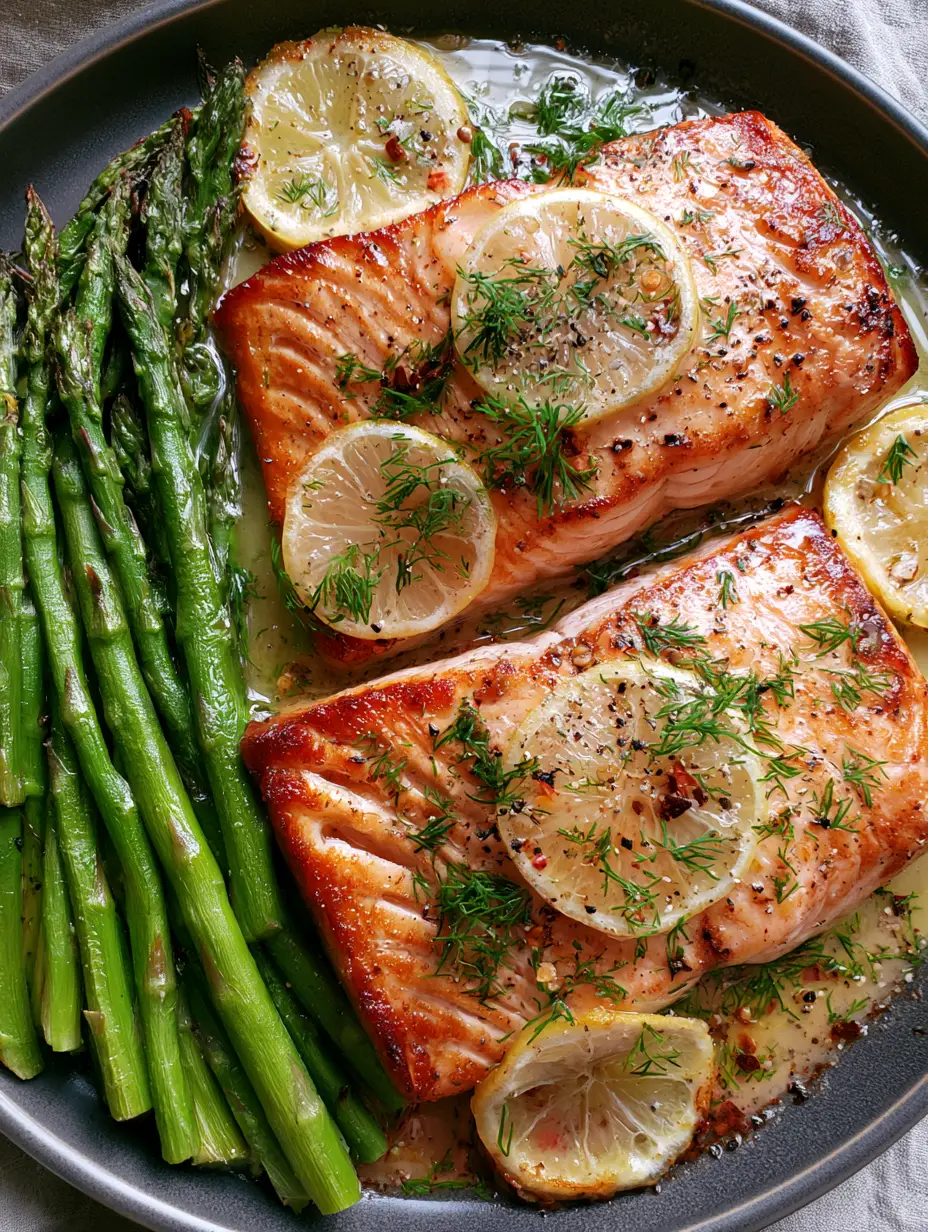
Baked Salmon and Asparagus with Garlic Butter and Lemon
Ingredients
Equipment
Method
- Preheat your oven to 425°F (220°C). Prepare a dark matte sheet pan.
- In a small bowl, whisk together the melted butter, minced garlic, and 1 tbsp lemon juice.
- Pat salmon dry and place on the pan. Coat with garlic butter glaze. Toss asparagus with olive oil and salt and arrange around the fish.
- Top the salmon with ultra-thin lemon wheels.
- Bake for 12-15 minutes until the salmon is flaky and asparagus tips are charred. Optional: Broil for the last 60 seconds for extra crispiness.
- Remove from oven and immediately top with fresh dill, sea salt, cracked pepper, and red chili flakes.
Notes
Use a dark pan for better heat absorption and charring.
Closing & Call to Action
This baked salmon and asparagus is a testament to how simple ingredients, when treated with the right culinary techniques, can create a world-class meal. The combination of succulent Atlantic salmon and charred asparagus spears is a healthy, delicious, and visually stunning addition to your weekly rotation. If you enjoyed this recipe, please leave a comment below and share your results! Don’t forget to follow whisk_harvest on Pinterest for more high-flavor, easy-to-make dinner inspiration.