There is something inherently sophisticated about a perfectly prepared piece of fish, yet the true magic of this baked salmon with lemon and dill lies in its effortless simplicity. Imagine walking into your kitchen to the scent of bubbling butter, bright citrus, and the earthy aroma of fresh dill fronds. This isn’t just a meal; it is a sensory experience that brings the elegance of a high-end bistro right to your rustic silver baking sheet.
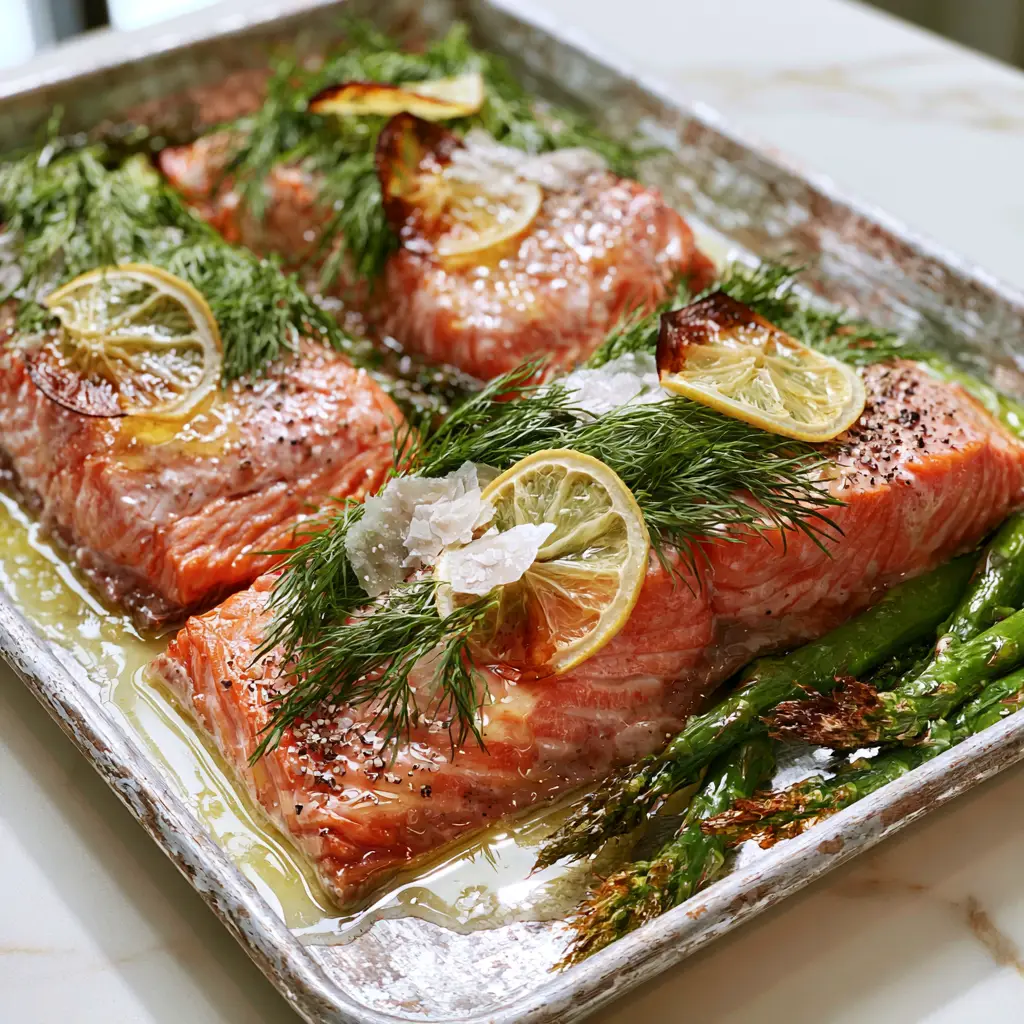
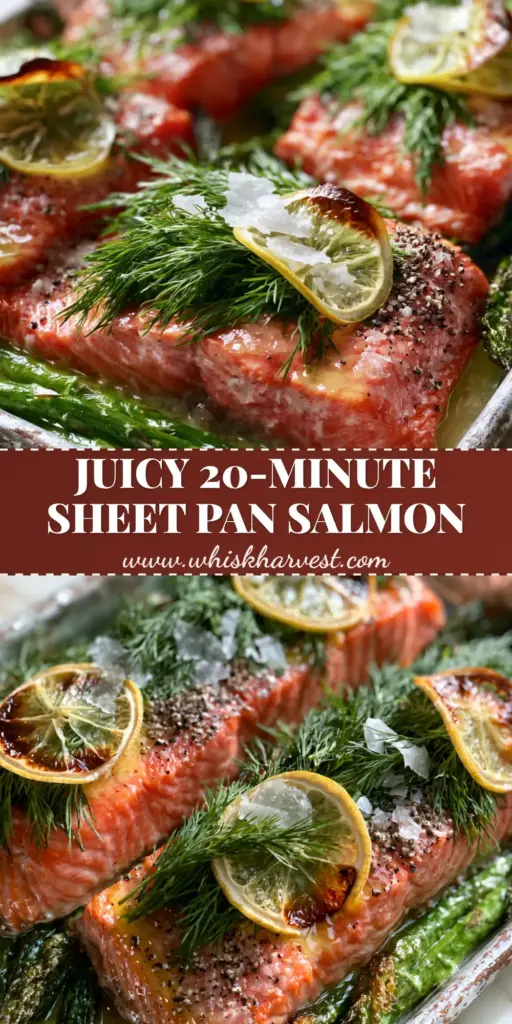
When you look at a thick, center-cut Atlantic salmon fillet, you are looking at a canvas of vibrant coral pink. The goal of this recipe is to preserve that stunning color while introducing a glistening, glossy glaze of melted butter that pools in the natural flakes of the fish. By the time it leaves the oven, the lemons should be paper-thin with caramelized, charred brown edges, providing a sharp contrast to the soft, buttery texture of the salmon.
Whether you are looking for a quick weeknight win or a centerpiece for a weekend dinner party, this dish delivers on every front. It is nutritionally dense, visually breathtaking, and scientifically designed to remain juicy. Let’s dive into the techniques that transform these humble ingredients into the masterpiece you see in our vibrant culinary photography.
Why This Herb-Crusted Salmon Recipe Works
- Visual Contrast: The deep green of the fresh dill sprigs against the vibrant coral pink of the Atlantic salmon creates a professional-grade presentation that looks as good as it tastes.
- Texture Mapping: We utilize a high-heat roasting method to ensure the salmon stays flaky and moist while the asparagus tips become crispy and seared.
- The Maillard Reaction: By slicing the lemons paper-thin, we allow the oven’s heat to caramelize the natural sugars, resulting in those sought-after charred brown edges.
- One-Pan Efficiency: This recipe is a complete “Sheet Pan Dinner,” meaning minimal cleanup and maximum flavor infusion as the juices from the lemon and butter mingle with the roasting asparagus.
The Anatomy of Ingredients for Success
The Star: Center-Cut Atlantic Salmon
For this recipe, we specify three thick, center-cut fillets (approx. 6oz (170g) each). This cut is preferred over the tail end because of its uniform thickness, which ensures even cooking and a beautiful, thick presentation on the plate.
The Fat: High-Quality Unsalted Butter
We use 3 tbsp (42g) of melted unsalted butter to create a glossy glaze. Butter not only carries the flavor of the dill but also creates a barrier that prevents the fish from drying out in the oven’s dry heat.
The Aromatics: Fresh Dill and Paper-Thin Lemons
You will need a generous bunch of fresh dill fronds. Unlike dried herbs, fresh dill provides a bright, grassy punch that cuts through the richness of the salmon fat. The lemons must be sliced almost translucently to achieve that perfect char.
The Side: Vibrant Green Asparagus
One bunch (approx. 1lb (450g)) of asparagus spears acts as the perfect companion. We tuck them around the fish so they can soak up the lemon-butter drippings while their tips get seared to a satisfying crunch.
The Finish: Flaky Sea Salt and Cracked Black Pepper
Don’t underestimate the power of texture. Using coarse sea salt flakes provides a “crunch” that highlights the softness of the fish, while coarse cracked pepper adds a localized heat that balances the citrus.
Essential Kitchen Tools for This Bake
To achieve the visual result of a handheld smartphone photo taken at a slight 45-degree angle, you need the right gear. A rustic silver baking sheet is ideal because it conducts heat efficiently and provides that “home-cooked” aesthetic. You will also need a sharp mandoline or a very sharp chef’s knife to get those lemon slices thin enough to caramelize without burning the fish.
A pastry brush is highly recommended for applying the melted butter glaze. This ensures every nook and cranny of the salmon flesh is glistening and protected. Finally, an instant-read thermometer is your best friend to ensure you hit that perfect internal temperature of 125°F (52°C) for a medium, flaky finish.
Step-By-Step: Mastering the Baked Salmon with Lemon and Dill
Preparing the Sheet Pan Landscape
Preheat your oven to 400°F (200°C). While the oven reaches temperature, take your salmon fillets out of the refrigerator for about 10 minutes to take the chill off. Pat the skin and flesh completely dry with paper towels; moisture is the enemy of a good sear and a glossy glaze.
Applying the Glossy Citrus Glaze
Place your fillets on the rustic silver baking sheet. In a small bowl, whisk together the melted butter and 1 tbsp (15ml) of fresh lemon juice. Using your pastry brush, coat the top and sides of the salmon until they are glistening. This is the foundation of that “handheld photo” shine.
Layering the Flavor Profiles
Now, build your visual layers. Press a dense layer of fresh dill fronds onto the buttered surface of each fillet. Top each with two paper-thin lemon slices. Sprinkle generously with the flaky sea salt and coarse cracked black pepper. The salt should be visible, like small crystals resting on the dill.
Roasting for Texture and Char
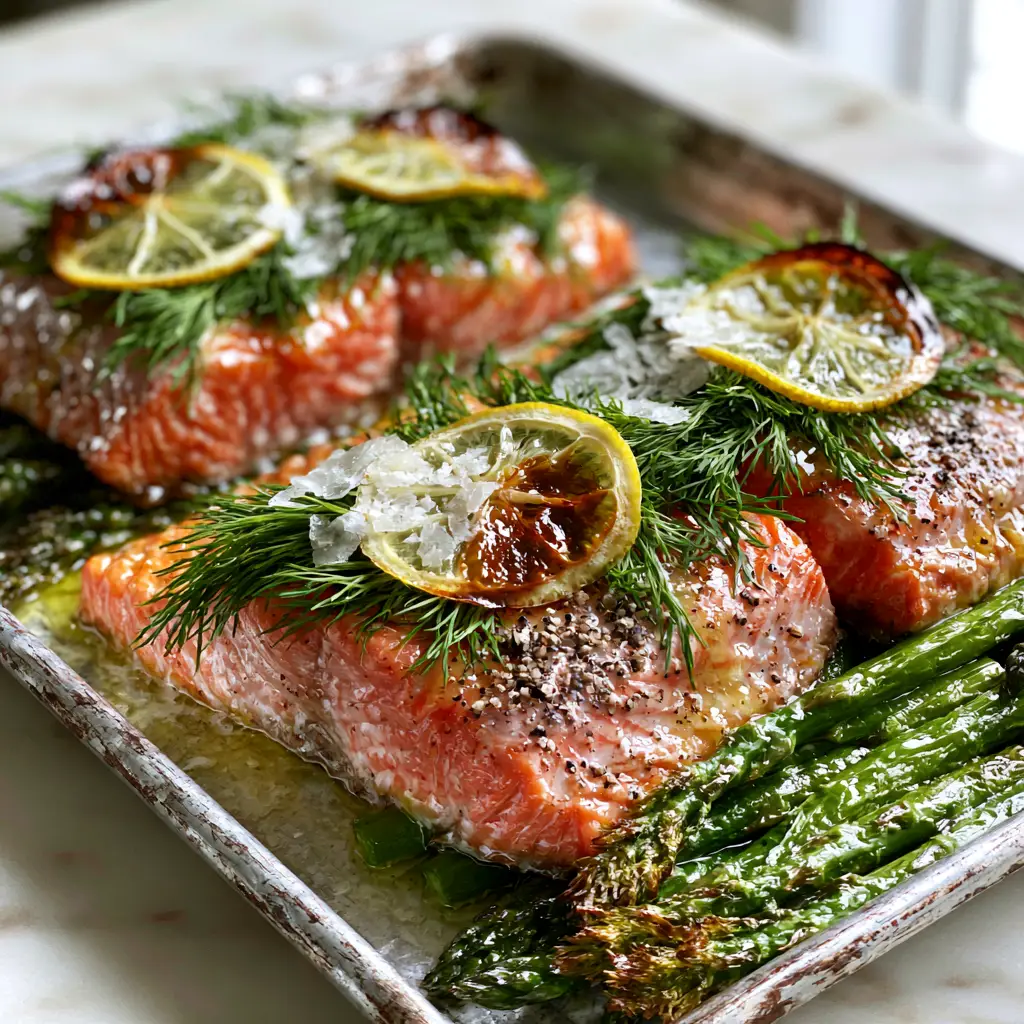
Arrange the asparagus spears around the salmon, drizzling them with a touch of olive oil and a pinch of salt. Slide the tray into the center rack of the oven. Roast for 12-15 minutes. For the final 2 minutes, you can toggle the broiler to “High” to ensure the lemon edges achieve that caramelized brown char and the asparagus tips become crispy.
The Visual and Sensory Cue
Your baked salmon with lemon and dill is done when the flesh is opaque but still a vibrant coral pink in the center. The butter should be bubbling on the pan, and the dill should have darkened slightly but remained intact. If you see white proteins (albumin) bubbling out, the fish is nearing overdone—pull it immediately!
Expert Tips for a Flawless Salmon Bake
- Sourcing: Look for “center-cut” fillets. They are thicker and have a higher fat content, which leads to a much more succulent mouthfeel than the thinner tail sections.
- The Skin Factor: Even if you don’t eat the skin, bake the salmon with the skin on. It acts as an insulator, protecting the delicate flesh from the direct heat of the metal pan.
- Don’t Over-Dill: While the prompt calls for a “dense layer,” ensure the dill is fresh. Old dill can turn bitter when exposed to high heat.
- Lemon Selection: Use Meyer lemons if available. They have a higher sugar content, which leads to better caramelization and a less acidic, sweeter finish.
How to Store and Reheat Your Salmon
If you have leftovers, this baked salmon with lemon and dill stays delicious for up to 2 days in the refrigerator. Store it in an airtight glass container to prevent the lemon aroma from permeating other foods. To reheat, avoid the microwave, which will turn the fish rubbery.
Instead, place the salmon back on a baking sheet, cover it loosely with foil, and warm it in a 275°F (135°C) oven for about 8-10 minutes. This low-and-slow method preserves the flaky texture and prevents the butter glaze from breaking into a greasy mess. Leftover salmon is also incredible when served cold over a Vietnamese glass noodle salad.
Perfect Pairings for a Complete Meal
While the roasted asparagus spears make this a fantastic one-pan meal, you might want to bulk up the dinner table. This salmon pairs beautifully with a light starch. Consider serving it alongside our potato butter crisp for a satisfying crunch that mirrors the crispy asparagus tips.
For a lighter, more refreshing side, an avocado mango salad offers a tropical sweetness that plays well with the dill and lemon. If you are looking for more seafood inspiration, check out our baked salmon and asparagus guide or try a different flavor profile with our maple glazed baked salmon.
Common Questions About Oven-Baked Salmon
While you can, we don’t recommend it for this recipe. Fresh dill provides the bright, grassy flavor and the ‘dense green layer’ aesthetic that dried dill simply cannot replicate.
No, flipping is not necessary. Baking the salmon skin-side down allows the heat to circulate around the top glaze while the skin protects the bottom from overcooking.
The key is slicing the lemons paper-thin. This allows them to caramelize and char quickly under the broiler during the last two minutes of cooking before the salmon dries out.
The salmon is done when it reaches an internal temperature of 125°F-130°F (52°C-54°C). Visually, the flesh should be opaque on the outside but still a vibrant coral pink and moist in the center.
That white substance is called albumin, a protein that escapes the muscle fibers when salmon is cooked. It’s completely safe to eat, but usually indicates the fish is starting to overcook.
The Final Word on This Dill-Crusted Delight
The beauty of this baked salmon with lemon and dill is that it proves you don’t need complex techniques to achieve world-class results. By focusing on high-quality ingredients and paying attention to visual cues—like the char on a lemon or the glisten of a butter glaze—you can create a healthy, impressive dinner in under 30 minutes.
Baked Salmon with Lemon and Dill: The Ultimate Flaky Sheet Pan Dinner
Ingredients
Equipment
Method
- Preheat oven to 400°F (200°C). Pat the salmon fillets dry with paper towels to ensure the butter glaze sticks and the fish doesn't steam.
- Whisk melted butter and lemon juice together. Brush generously over the salmon fillets. Press a thick layer of fresh dill onto each fillet, then top with the paper-thin lemon wheels.
- Place salmon on a silver baking sheet. Arrange asparagus around the fish, drizzling them with olive oil and a pinch of salt.
- Bake for 12-15 minutes until the salmon is flaky and coral pink. For the last 2 minutes, use the broiler to char the edges of the lemons and crisp the asparagus tips.
Notes
Ensure lemons are sliced paper-thin to achieve the caramelized brown edges without overcooking the salmon.
We hope this recipe becomes a staple in your kitchen! If you enjoyed the vibrant flavors and the simple cleanup, please leave a comment below and let us know how your charred lemons turned out. Don’t forget to share your creations and follow us on Pinterest for more culinary inspiration.