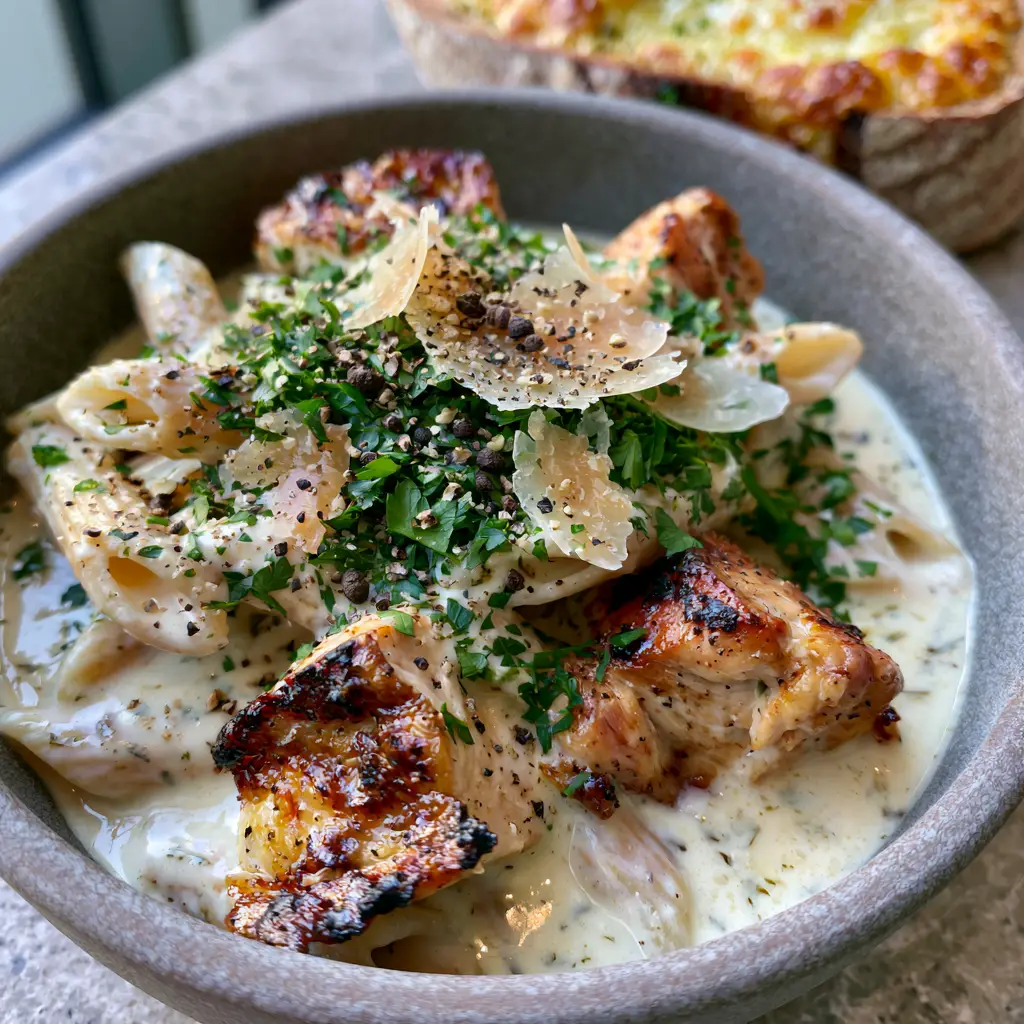
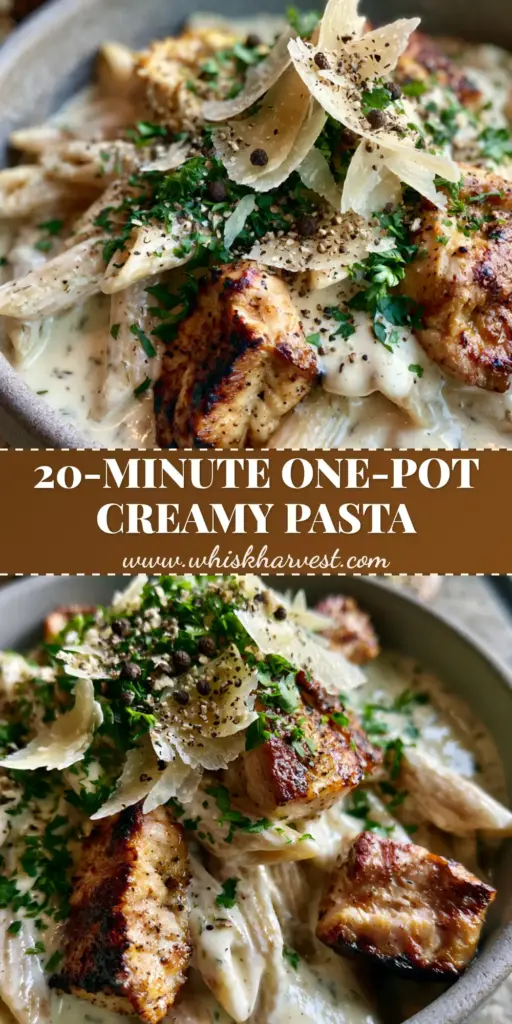
There is something inherently comforting about a deep, rustic matte-grey ceramic bowl piled high with Chicken Penne. It is the kind of dish that demands your full attention, from the way the ivory-colored cream sauce clings to every ridge of the pasta to the aromatic steam rising from pan-seared chicken chunks.
In this recipe, we are moving beyond the basic weeknight pasta. We are focusing on high-level culinary techniques like the Maillard reaction for the chicken and a perfect emulsification for the garlic-infused parmesan sauce.
The result is a visually stunning, restaurant-quality meal that looks exactly like a high-end lifestyle photograph. Imagine succulent chicken with charred edges resting atop a bed of velvety pasta, finished with emerald-green parsley and translucent shavings of aged parmesan.
Why This Creamy Chicken Penne Works Every Single Time
- The Texture Contrast: We achieve a deep golden-brown crust on the chicken breast, providing a crispy counterpoint to the al dente penne.
- The “Ivory” Sauce: By using heavy cream and freshly grated aged parmesan, we create a thick, velvety sauce that is visually white and rich in flavor.
- Aromatic Foundation: Freshly cracked black peppercorns and toasted garlic create layers of flavor that boxed sauces simply cannot replicate.
- The Sourdough Side: Serving this with artisan sourdough garlic bread allows you to mop up every drop of the garlic-parmesan gold.
The Essential Ingredients for Gourmet Pasta Success
Penne Rigate (Dry): You need 1 lb (450g) of penne with ridges. These ridges are scientifically designed to “trap” the thick cream sauce, ensuring every bite is fully coated.
Chicken Breast: Use 1.5 lbs (680g) of boneless, skinless chicken breast. Cutting them into uniform 1-inch (2.5cm) chunks allows for maximum surface area to develop that signature golden-brown char.
Heavy Cream: 2 cups (480ml) of high-fat heavy cream is non-negotiable. It provides the structural integrity needed for a thick, ivory sauce that doesn’t break under heat.
Aged Parmesan Cheese: You will need 1 cup (90g) finely grated for the sauce and extra for those delicate, translucent shavings on top. Aged parmesan provides the saltiness and umami depth required for the dish.
Fresh Garlic: 4-6 cloves (approx. 30g) of freshly minced garlic. Garlic is the backbone of this flavor profile; avoid the pre-minced jarred variety at all costs.
Flat-Leaf Parsley: Half a bunch (approx. 15g) of emerald-green parsley. It adds a necessary pop of color and a fresh, herbaceous finish to the heavy cream base.
Artisan Sourdough: 4 thick slices of sourdough. The tang of the sourdough balances the richness of the parmesan cream sauce perfectly.
Foundational Elements: 2 tbsp (30ml) high-smoke point oil for searing, 4 tbsp (60g) unsalted butter for the sauce and bread, and plenty of Kosher salt for the pasta water.
Tools Required for Professional Results
To achieve the “smartphone-photo” aesthetic, you need a heavy-bottomed skillet—ideally cast iron or stainless steel—to get the deep sear on the chicken. A large pasta pot is essential for boiling the penne in at least 4 quarts (3.8L) of water to prevent sticking.
A microplane or fine grater is necessary for the parmesan to ensure it melts instantly into the sauce. Finally, a rustic ceramic bowl will provide the neutral, matte-grey background that makes the ivory sauce and green parsley pop visually.
How to Master the Perfect Chicken Penne
Step 1: Achieving the Al Dente Standard
Bring a large pot of water to a rolling boil and add 2 tbsp (30g) of Kosher salt. The water should taste like the sea; this is your only chance to season the pasta itself.
Add 1 lb (450g) of penne and cook for approximately 8-10 minutes. Begin tasting the pasta 2 minutes before the package directions end; you want a firm bite in the center, known as al dente.
Step 2: The Art of the Golden-Brown Sear
While the pasta cooks, pat your chicken chunks completely dry with paper towels. Moisture is the enemy of the sear; if the chicken is wet, it will steam instead of browning.
Heat 2 tbsp (30ml) of oil in your skillet over medium-high heat until shimmering. Add the chicken in a single layer, ensuring they do not touch. Let them sit undisturbed for 3-4 minutes.
Look for the visual cue: the edges should be turning a deep golden-brown and slightly charred. Flip and cook for another 2-3 minutes until the centers are opaque and succulent.
Step 3: Crafting the Thick Garlic Parmesan Cream Sauce
Remove the chicken from the skillet and lower the heat to medium. Add 2 tbsp (30g) of butter and your minced garlic, sautéing for only 30-60 seconds until fragrant but not browned.
Pour in 2 cups (480ml) of heavy cream. Use a wooden spoon to scrape up the “fond”—the brown bits left by the chicken—into the sauce for extra flavor. Simmer for 5 minutes until the cream reduces slightly.
Whisk in 1 cup (90g) of finely grated parmesan cheese. Watch as the sauce transforms into a thick, velvety, ivory-colored glaze. Stir in half of your chopped parsley and a generous amount of coarse cracked black pepper.
Step 4: The Toasted Sourdough Side
Spread the remaining 2 tbsp (30g) of butter onto your sourdough slices and sprinkle with a touch of garlic powder and extra parmesan. Broil in the oven for 2-3 minutes.
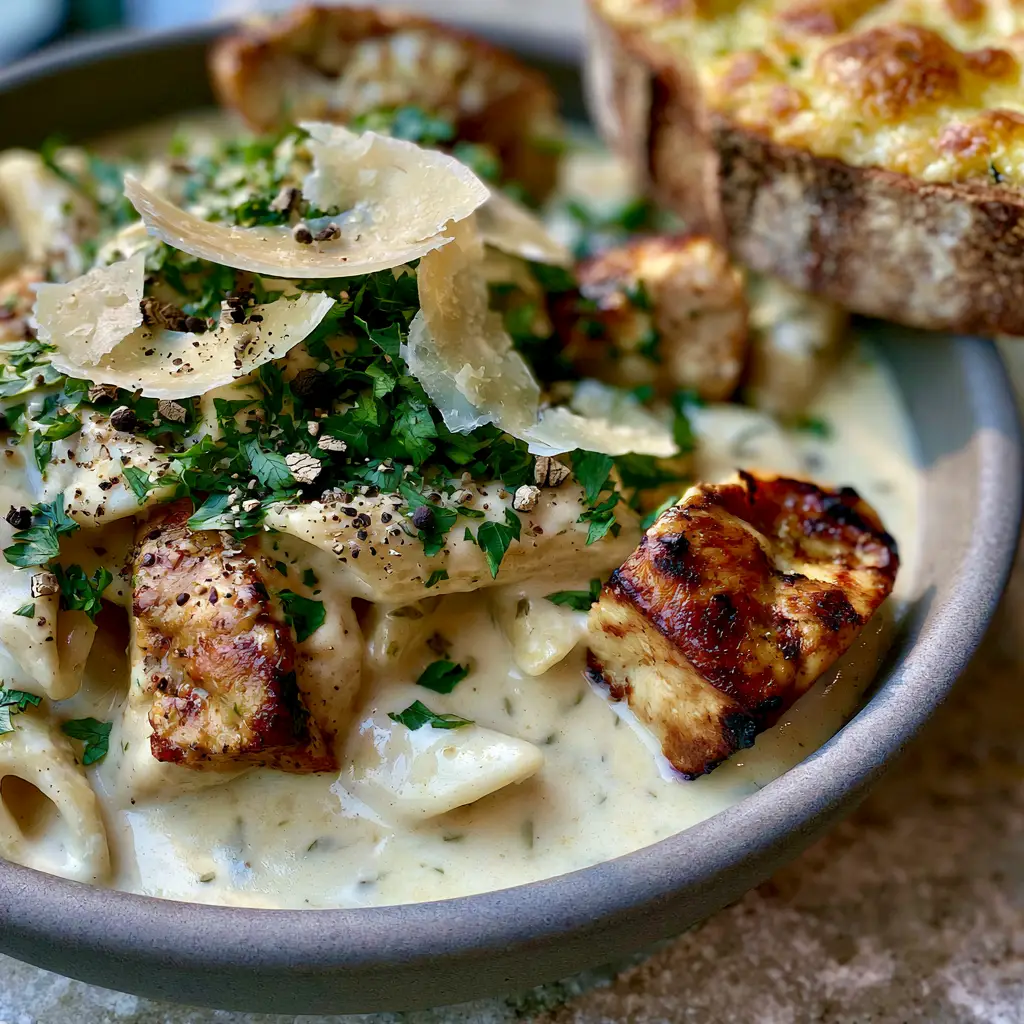
You are looking for a bubbling, toasted golden cheese crust with edges that are just beginning to turn dark brown. This adds a crunch factor that elevates the entire meal experience.
Step 5: Final Assembly and Garnish
Toss the al dente penne and seared chicken into the sauce. If the sauce is too thick, add a splash of reserved pasta water (the starch helps the sauce stick).
Plate the pasta in your matte-grey bowls. Layer on the vibrant emerald-green parsley, more coarse black pepper, and those delicate shavings of aged parmesan that melt slightly upon contact.
Expert Tips for the Ultimate Pasta Experience
- Temper Your Cream: Take the heavy cream out of the fridge 15 minutes before using. Adding cold cream to a hot pan can sometimes cause minor curdling.
- Freshly Cracked Pepper: Do not use pre-ground pepper. The oils in freshly cracked peppercorns provide a floral heat that defines the visual and flavor profile of this Chicken Penne.
- The Cheese Shaver: Use a vegetable peeler to get those wide, translucent shavings of parmesan. It looks much more professional than standard grated cheese.
- Don’t Rinse the Pasta: The starch on the surface of the penne is what allows the garlic parmesan sauce to emulsify and cling to the noodles.
Storing and Reheating Your Creamy Pasta
Chicken Penne is best served immediately while the sauce is at its peak silkiness. However, you can store leftovers in an airtight container in the refrigerator for up to 3 days.
When reheating, the cream sauce will likely have thickened significantly. Add a tablespoon of milk or water before microwaving or heating on the stovetop to loosen the sauce back to its original ivory consistency.
Pairing Your Chicken Penne with Global Flavors
While this dish is a complete meal on its own, it pairs beautifully with a crisp green salad or a side of roasted vegetables. If you enjoy this creamy profile, you might also love our spicy pasta variation for a bit more heat.
For those who prefer a tangier bird, try serving this alongside some tangy balsamic chicken. If you’re looking for more inspiration for your weekly rotation, check out our collection of international dinner recipes for a total change of pace.
Finally, if you want a lighter seafood option that still utilizes that gorgeous garlic-butter base, our garlic butter baked salmon is an absolute crowd-pleaser.
Frequently Asked Questions
It is not recommended. Pre-grated cheese is coated in potato starch or cellulose to prevent clumping, which can lead to a grainy sauce. Freshly grated aged parmesan melts into a much smoother, velvety consistency.
The secret is high heat and a dry surface. Pat the chicken dry with paper towels and use a cast-iron skillet. Don’t crowd the pan, and let the chicken sit undisturbed for at least 3 minutes to develop that deep golden-brown crust.
Yes, you can substitute the penne for a high-quality gluten-free corn or brown rice penne and swap the sourdough for your favorite gluten-free artisan bread. The sauce components are naturally gluten-free.
Use a large pot with plenty of water and salt it heavily. Do not add oil to the water, as this prevents the sauce from clinging to the penne later. Stir the pasta immediately after adding it to the boiling water.
A thin sauce usually results from using milk instead of heavy cream or not allowing the cream to reduce. Ensure you use heavy cream (36% fat) and let it simmer for a few minutes before adding the cheese.
The Ultimate Chicken Penne Recipe Card
Chicken Penne with Garlic Parmesan Cream Sauce and Toasted Sourdough
Ingredients
Equipment
Method
- Bring a large pot of salted water to a boil. Cook penne until al dente, about 8-10 minutes. Reserve 1/2 cup of pasta water and drain.
- Pat chicken dry. Heat oil in a large skillet over medium-high. Sear chicken chunks until deep golden-brown with charred edges (about 6-7 minutes total). Remove from pan.
- In the same skillet, melt butter and sauté garlic for 1 minute. Pour in heavy cream and simmer for 5 minutes until thickened. Whisk in grated parmesan until velvety and ivory-colored.
- Toss the penne and chicken into the sauce. Add reserved pasta water if needed to reach desired consistency.
- Serve in bowls topped with chopped parsley, coarse cracked pepper, and shaved parmesan. Serve with toasted garlic sourdough.
Notes
Ensure chicken is patted dry to achieve the deep golden-brown charred edges.
Closing & Call to Action
This Chicken Penne represents the pinnacle of home-cooked comfort. By focusing on the sear of the chicken and the thickness of the parmesan cream, you’ve created a dish that tastes even better than it looks. We would love to see your results! Please leave a comment below and share your photos with us on Pinterest.